
Quartz fiber, renowned for its high purity, high-temperature resistance, ablation resistance, low thermal conductivity, thermal shock resistance, wave transmission, excellent dielectric properties, and good chemical stability, plays an indispensable role in high-end manufacturing sectors such as aerospace, electronic communications, and optics.
However, the journey from natural high-purity quartz ore to high-performance quartz fiber products entails a stringent pursuit of overall process excellence and is influenced by numerous factors.
- Raw Materials
The focus regarding raw materials primarily lies in their purity, particle size, and gas inclusions. In terms of purity, metal impurities are a critical influencing factor.
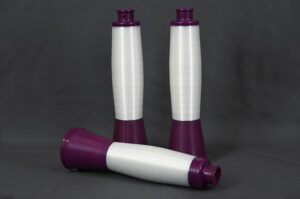
Even trace amounts (at the parts-per-million level) of alkali metal, alkaline earth metal, or transition metal ions can significantly impact quartz fiber products: they reduce heat resistance, making the fiber prone to deformation and failure at high temperatures; they induce crystallization, accelerating the transformation of quartz glass from an amorphous state to a crystalline cristobalite state at high temperatures, leading to fiber embrittlement and a sharp decline in strength; and they affect dielectric properties, as impurity ions increase dielectric loss, hindering its application in high-frequency electronics.
The particle size and gas inclusions in the raw materials determine the bubble content of the produced quartz rods.
Quartz glass rods with high bubble content are prone to filament breakage (“flying filaments”) during melting and drawing, and lead to an increase in surface micro-defects of the quartz fiber, which adversely affects the quality and performance of the final quartz fiber product.
- Melting and Drawing
The process of converting solid quartz material into continuous, uniform fibers is a critical stage that determines its microstructure and mechanical properties.
Taking the drawing of quartz rods melted by an oxyhydrogen flame as an example, the purity of hydrogen and oxygen, their pressure, gas flow rates, temperature control and regulation, the drawing process route, and equipment are all direct determinants of quartz fiber product quality.
The melting temperature is primarily controlled by the flow rate and pressure of the combustion gases.
Excessively high melting temperatures cause fibers to melt and break easily, while excessively low temperatures increase forming tension, leading to frequent filament breakage. Furthermore, environmental cleanliness is crucial, as the entire drawing process must occur in an ultra-clean environment.
Any dust particles from the air adhering to the fiber surface can become stress concentration points, significantly reducing its mechanical strength.
III. Microstructure
The stability of quartz fiber in long-term high-temperature environments directly depends on its ability to resist crystallization. As mentioned earlier, crystallization is the primary failure mechanism for quartz fiber at high temperatures.
The crystallization rate has an exponential relationship with temperature. Key factors affecting crystallization include:
- Surface State: Micro-cracks, contamination, and abrasion on the fiber surface can all serve as initiation points for crystallization. Therefore, fiber surface treatment and the application of protective coatings are crucial.
- Micro-defects: For brittle materials like quartz fiber, their strength is extremely sensitive to micro-defects such as surface and internal micro-cracks, bubbles, and inclusions. Post-processing techniques like flame polishing and acid pickling can effectively heal surface micro-cracks and enhance strength.
- During the quartz fiber drawing process, a specialized surface treatment agent, or sizing agent, must be applied to the fiber surface.
- This agent effectively lubricates the fiber surface, integrates individual filaments into a cohesive strand, and modifies the fiber’s surface state.
- This not only meets the processing requirements for subsequent stages of the raw fiber but also, in composite materials, promotes the bonding between the quartz fiber and the reinforced polymer matrix.
In summary, the quality of quartz fiber products is not determined by a single step but is the result of a comprehensive, systematic, and precise engineering effort spanning raw material purity, melting and drawing processes, microstructure control, and post-processing technologies.
Manufacturing high-quality quartz fiber requires not only high-purity raw materials and advanced equipment but also a profound understanding of physicochemical processes, precise control over process parameters, and a consistent spirit of craftsmanship.
On this path from raw ore to advanced material, the in-depth analysis and precise control of each key factor are the very core of achieving a leap in product quality.