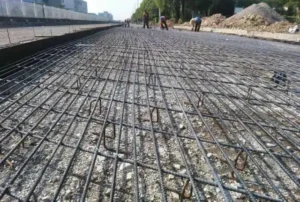
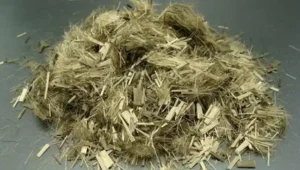
Basalt fiber is a continuous inorganic fiber material made solely from natural basalt ore. It is melted at temperatures between 1450°C and 1500°C and then drawn at high speed through a platinum-rhodium alloy drawing plate. It possesses core advantages such as high strength, high modulus, excellent high-temperature resistance, superior corrosion resistance, good thermal and acoustic insulation, oxidation resistance, radiation resistance, and is naturally natural and environmentally friendly.
Tank kiln fiber drawing technology has matured and gained widespread adoption in China, becoming a mainstream production process. The design and application of large-scale, intelligent tank kilns have significantly increased single-line capacity and efficiency, while also improving fiber homogeneity and stability. Some companies have made significant progress in tank kiln design, refractory material selection, melting and homogenization control, multi-hole bushing technology, and intelligent production line management, driving overall upgrades in production technology.
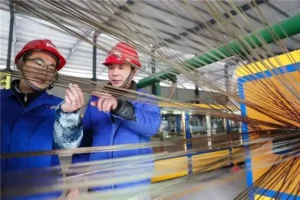
Key Technological Breakthroughs:
Cost Control: By optimizing the kiln structure, improving energy efficiency, refining the drawing process, extending the life of the bushings, and localizing core equipment, production costs have been reduced to a certain extent, enhancing the market competitiveness of the product.
Fiber Quality: Breakthroughs have been achieved in homogenizing basalt raw materials, precisely controlling melt temperature, and coordinating drawing speed and tension, resulting in more uniform fiber diameter, fewer defects, and superior mechanical properties.
New Product Development: A series of products have been developed for specific applications, such as alkali-resistant basalt fiber for concrete reinforcement, high-strength and high-modulus basalt fiber for composite materials, and high-temperature-resistant basalt fiber for high-temperature filtration.