
Nickel-plated Carbon Fibers
Nickel-plated carbon fibers are a lightweight fiber material with high conductivity. Through surface metallization treatment, the fibers achieve significantly enhanced electrical conductivity while retaining the original mechanical strength of the carbon fibers. Nickel plating on carbon fibers can improve the wettability between the fibers and a metal matrix, increase the interfacial bonding strength in metal matrix composites (MMCs), reduce the coefficient of thermal expansion, and enhance dimensional stability.

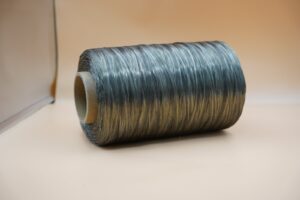
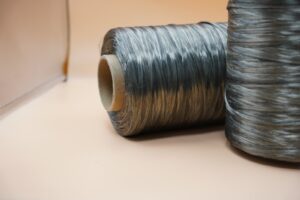
Carbon fiber is an ideal reinforcing material with numerous applications in aerospace, biomaterials, civil, military, and industrial fields. However, its widespread use is somewhat limited by certain drawbacks, such as poor wettability with some metals, susceptibility to solid-solution reactions, and insufficient chemical compatibility. To achieve high-performance carbon fiber composites, surface metallization is the most commonly employed method.
Surface-metallized carbon fiber can be used as stealth material in the airframes and skins of military aircraft, and as high-temperature-resistant material in components like the nose cones and wing leading edges of space shuttles.
Beyond these applications, surface-metallized carbon fiber has broad uses in small, high-capacity capacitors, magnetic thin films, electromagnetic shielding films for electronic devices, and the manufacturing of various functional components. Generally, the shielding effectiveness of composites is considered poor below 30 dB; moderate between 30–60 dB, suitable for general industrial or commercial electronic devices; good between 60–90 dB, applicable in aerospace and military instruments; and excellent above 90 dB, used for high-precision, highly sensitive products with stringent requirements.
However, carbon fiber shielding composites with higher electromagnetic shielding effectiveness currently rely mainly on imports and are expensive, making it difficult to meet the low-cost requirements of electronic products.
Nickel-plating on carbon fiber activates its surface and effectively reduces the contact angle between the fiber and metal solutions. In the production of carbon fiber-reinforced metal matrix composites, the metal matrix can directly contact the plating layer rather than the carbon fiber itself.
This allows the matrix metal to wet the carbon fiber surface effectively. The nickel plating layer acts as a barrier, preventing solid-solution reactions and chemical interactions between the matrix and the carbon fiber during composite fabrication and use, which could otherwise damage the fiber’s strength or form brittle phases at the interface. Additionally, the plating layer promotes effective bonding between the matrix and the fiber, ensuring efficient load transfer.