
Global Development Trends and Technology Forecast of 11 Types of High-Performance Fibers – Polyimide Fiber
High-performance fibers refer to a category of specialty fibers that exhibit exceptional resistance to physical and chemical effects from the external environment.
They represent one of the primary development directions in the chemical fiber industry in recent years and can be classified into organic and inorganic high-performance fibers based on their chemical composition.
These fibers are not only crucial strategic materials urgently needed for the development of the aerospace and defense industries, but they also play an irreplaceable role in advancing various strategic emerging industries, the low-carbon economy, and energy conservation and emission reduction.
They are an indicator of a nation’s comprehensive strength and technological innovation. Developed countries and regions such as Japan, the United States, and Europe place great importance on and have long monopolized the global R&D, production, and market of high-performance fibers.
Since 2006, with significant support from national policies and funding, China’s high-performance fiber industry has developed rapidly. A relatively comprehensive system for the R&D of domestic high-performance fiber preparation technologies, engineering practices, and industrial structure has been established.
This has substantially narrowed the gap with developed countries and effectively alleviated the urgent demand for high-performance fibers in the national economy and defense construction. The following introduces common high-performance fibers.
Polyimide fiber possesses not only high strength and modulus but also excellent chemical corrosion resistance, thermal-oxidative stability, and radiation resistance.
It is widely used in aerospace, national defense, new construction, high-speed transportation vehicles, marine development, sports equipment, new energy, environmental industries, and protective equipment.
Furthermore, it can serve as a superior material for bulletproof fabric, high specific strength ropes, spacesuits, and high-temperature protective clothing. Currently, China’s metallurgy industry requires approximately 100,000 sets annually of heat-insulating, breathable, and soft flame-retardant workwear.
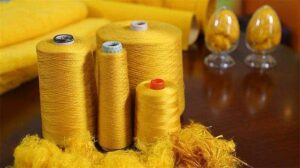

Sectors such as hydropower, nuclear industry, geology and mining, petrochemicals, and oil fields require about 300,000 sets of protective clothing per year, needing roughly 500 tons of polyimide fiber for high-temperature flame-retardant special protective garments. Additionally, the demand for fire and rescue protective clothing exceeds 200,000 sets per year.
This creates vast potential for the application of polyimide fiber in the field of high-temperature special protection. Polyimide is an umbrella term for a large family of materials with very diverse chemical structures, corresponding to fiber varieties with different properties and functions, thus enabling a broader application scope.
These varieties share many common challenges in polymer preparation and fiber forming, which is conducive to the development of multiple types. This capability can meet the demands for high-performance fibers in extreme aerospace environments and will play a significant role in China’s space exploration activities.