
Introduction to Polyimide Fiber
Polyimide fiber, also known as aromatic imide fiber, contains aromatic imide components in its molecular chain, giving it excellent spinnability.
This allows PI fiber to be meticulously woven into textiles suitable for various special applications.
This fiber is not only resistant to high and low temperatures and highly flame-retardant,
but also self-extinguishing upon removal of the flame, exhibiting excellent thermal insulation properties.
Therefore, polyimide fiber thermal insulation protective clothing is comfortable to wear, h
as good skin compatibility, is permanently flame-retardant, dimensionally stable, highly safe, and has a long service life.
Compared to other fibers, its low thermal conductivity makes it an excellent thermal insulation material.
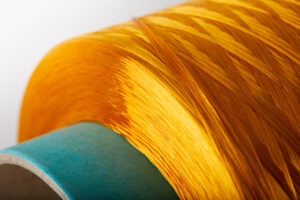
The Superior Properties of Polyimide Fiber
Polyimide fiber, due to its excellent spinnability, is widely used in the manufacture of textiles for various special applications.
This fiber is not only resistant to high and low temperatures and highly flame-retardant,
but also self-extinguishing upon removal of the flame, exhibiting excellent thermal insulation properties.
Therefore, polyimide fiber thermal protective clothing is comfortable to wear, has good skin compatibility,
is permanently flame-retardant, dimensionally stable, highly safe, and has a long service life.
Compared with other fibers, its low thermal conductivity makes it an excellent thermal insulation material.
In the field of labor protection clothing, my country’s metallurgical sector requires 50,000 sets of thermally insulated,
breathable, soft, and flame-retardant work clothes annually, while hydropower, nuclear industry, mining, petrochemical,
and oilfield sectors require 300,000 sets of protective clothing and approximately 300 tons of high-temperature resistant, flame-retardant special protective clothing fibers annually.
Furthermore, polyimide fiber nonwoven fabric is an ideal choice for making fire-retardant clothing,
such as protective clothing for armored forces, fire-resistant racing suits, and flight suits. Simultaneously.
This nanofiber nonwoven fabric can also be used to manufacture comfortable and warm functional clothing, such as military uniforms and medical protective clothing.
Polyimide fiber Physical Properties
Polyimide fibers possess a variety of physical properties, including good strength, elongation, modulus, and weather resistance.
Ether-based homopolymer fibers exhibit high strength, retaining 50%–70% of their strength even after 100 hours at 300°C.
Furthermore, these fibers demonstrate excellent flame retardancy, with a limiting oxygen index as high as 44, and also exhibit impressive radiation resistance.
On the other hand, ketone-based copolymer fibers possess a unique irregular cross-sectional structure,
which endows them with excellent physical properties such as strength, elongation, and modulus.
Their density is 1.41 g/cm³, and their shrinkage rates at boiling water and 250°C are both less than 0.5% and 1%, respectively, demonstrating excellent dimensional stability.
Main Application Areas
Polyimide fiber, a high-performance fiber, plays a crucial role in multiple fields.
Its excellent spinnability allows it to easily meet the manufacturing needs of textiles for various special occasions.
Whether in high or low temperature environments, this fiber exhibits strong weather resistance,
while its flame-retardant properties make it an ideal choice for safety protection.
Furthermore, polyimide fiber has excellent thermal insulation properties;
Thermally insulated protective clothing made from it is not only comfortable to wear but also highly safe and has a long service life.
Due to its low thermal conductivity, it has become an excellent thermal insulation material, widely used in occupational safety, aerospace, and many other fields.
Polyimide fiber Spinning Process
The spinning process of polyimide fibers mainly includes wet spinning and dry spinning.
Furthermore, depending on the spinning slurry, it can be divided into one-step spinning and two-step spinning.
In the first step, a concentrated solution of polyamic acid is spun through wet or dry spinning to obtain polyamic acid fibers.
In the second step, these polyamic acid fibers undergo chemical or thermal cyclization treatment, ultimately transforming into polyimide fibers.
This two-step process is widely used in the research and production of polyimide fibers. In addition,
the fiber stretching process can be performed in the first step, the second step, or even appropriately in each step.