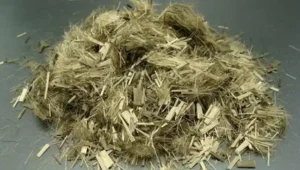
Basalt fiber is an inorganic fiber material made from natural basalt ore that is melted at high temperatures and then drawn. Its main components are silicon dioxide, aluminum oxide, and calcium oxide. Similar to glass fiber, it has a wide range of industrial applications.
1. Reinforced composite materials
Basalt fiber is often used as a reinforcement in composite materials. Compared to traditional glass or carbon fibers, it offers higher tensile strength and high-temperature resistance. For example, in the construction industry, basalt fiber can be added to concrete to improve its crack resistance and durability. In automotive manufacturing, it is used to produce lightweight components, reducing vehicle weight while increasing structural strength.
Why choose basalt fiber over other fibers?
Basalt fiber offers superior corrosion resistance to many metals, and is particularly stable in humid or chemically aggressive environments. Its relatively low production cost and widespread availability make it more economical than carbon fiber in certain applications.
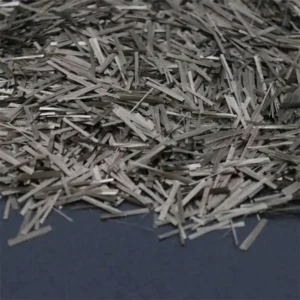
2. High temperature resistance and fire resistance
Basalt fiber has a high melting point and typically remains stable above 1000°C, making it widely used in high-temperature environments. For example, in firefighting equipment, basalt fiber can be used to make protective equipment such as fire blankets and fireproof clothing. It is also used in industrial furnace linings and high-temperature pipeline insulation, effectively reducing heat loss and improving safety.
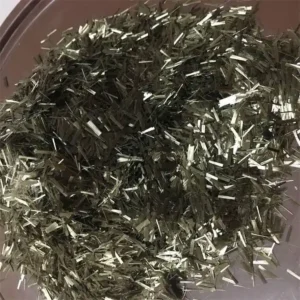
3. Electrical insulation and sound insulation effects
Basalt fiber has excellent electrical insulation properties, making it suitable for use as insulation in electrical equipment. Its porous structure provides it with sound absorption and insulation capabilities, leading to its use in architectural sound insulation panels and automotive interiors.
4. Environmentally friendly characteristics
Basalt fiber’s production process is minimally polluting, and the product is recyclable, meeting modern industry’s demand for environmentally friendly materials. Compared to some synthetic fibers, it degrades more easily in the natural environment, reducing its long-term impact on the ecological environment.
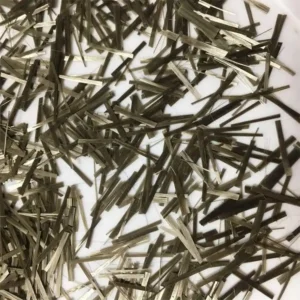
5. Other special purposes
Basalt fiber can also be used to make filter materials. Its acid and alkali resistance makes it suitable for treating industrial wastewater or exhaust gas. Its lightweight and high-strength properties have also attracted attention in the aerospace field. Although its current application scale is relatively small, it may have broader development potential in the future.