Table of Contents
ToggleModern industrial manufacturing and the construction of high-standard infrastructure impose extremely rigorous physical and chemical requirements on structural reinforcement materials.
Although traditional oriented woven fabrics (such as fiberglass cloth) possess high tensile strength along specific interlacing axes, they often exhibit shortcomings—such as uneven stress transfer and a susceptibility to micro-crack propagation—when subjected to multidirectional localized stress concentrations or the infiltration of highly corrosive media.
As a cost-effective, high-performance non-woven reinforcement material, fiberglass mat perfectly bridges this technical gap thanks to its unique, randomly oriented, interlaced network structure. By precisely controlling the random distribution of inorganic silica (SiO₂) filaments and utilizing customized chemical resin binders, manufacturers can achieve a precise alignment of microstructure and macroscopic performance tailored to diverse industrial applications—ranging from demanding waterproofing substrates for construction and mold-resistant facings for high-end exterior gypsum boards to heavy-duty anti-corrosion linings for fiber-reinforced plastic (FRP).
1. Science of Nonwoven Glass Fibers: Microstructure and Isotropic Mechanics
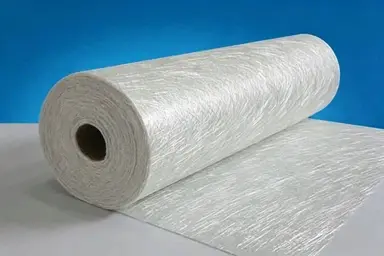
To accurately assess the core value of fiberglass mats in engineering applications, it is essential to conduct an in-depth analysis of their non-woven micro-physical architecture.
1.1 Comparison of Isotropic and Anisotropic Mechanical Strains
When industrial components are subjected to irregular thermal expansion, seismic shear forces, or external mechanical impacts, the stresses they endure are often multidirectional and unpredictable. Directional fabrics exhibit significant anisotropy; their tensile strength is highly concentrated along the 0° and 90° (warp and weft) axes, whereas their tear resistance modulus drops precipitously under 45° diagonal shear forces.
Fiberglass mats are formed by intertwining randomly distributed chopped strands or continuous filaments into a network, creating a uniform physical mesh in three dimensions that exhibits excellent isotropic mechanical properties. This ensures that, regardless of the angle of applied stress, the internal fiber network distributes the load evenly, effectively preventing matrix cracking caused by localized stress concentrations.
1.2 Interfacial Passivation and Chemical Modification via Silane Coupling Agents
The long-term service life of fiberglass mats depends not only on the tensile strength of the fibers themselves but, even more critically, on the efficiency of the interfacial bonding between the inorganic glass fibers and the organic resin matrix.
- Application of Silane Coupling Agents: Leading international manufacturing processes typically involve surface modification of the raw fibers by applying specific organofunctional silanes during the fiber attenuation stage. One end of the silane molecule undergoes hydrolysis to form silanol groups, which establish covalent bonds with the hydrophilic glass fiber surface; the other end contains reactive groups (such as amino or epoxy groups) capable of reacting with epoxy, polyester, or modified asphalt, thereby creating a robust chemical bridge between the inorganic fibers and the organic matrix.
- Industry Benchmark Data: Tests detailed in industry white papers—such as those from Owens Corning and Johns Manville—demonstrate that fiberglass mats treated with optimized surface wetting agents exhibit a resin impregnation rate increase of over 30% during closed-mold vacuum injection or high-temperature asphalt coating processes, while reducing internal micro-void content to below 0.5%.
Regarding the microscopic interfacial morphology and bonding mechanisms of inorganic silica filaments in nonwoven processes, engineers can cross-reference the American Ceramic Society (ACerS) database on the physicochemical properties of high-performance inorganic non-metallic materials.
2. Architectural Waterproofing and Roofing Base Felts (Waterproofing & Roofing Membranes)
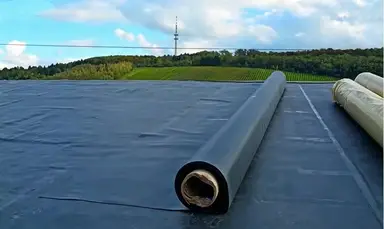
In modern construction engineering and the design of waterproofing for large-span underground structures, the mechanical service life of modified bitumen waterproofing membranes (SBM) and asphalt shingles is determined almost entirely by their internal fiberglass reinforcement mats.
2.1 Mechanism for controlling structural stress concentration
Throughout their service life, building waterproofing layers are frequently subjected to damage caused by substrate cracking, concrete settlement, and intense diurnal thermal cycles. If a pure asphalt layer is used, the material becomes brittle at low temperatures and undergoes rheological deformation and thinning under tensile stress, ultimately leading to water leakage.
The wet-laid fiberglass mat, serving as the internal reinforcement base, acts as a “stress damper.” Due to its exceptionally high elastic modulus and very low elongation at break, the mat constrains the spatial displacement of the surrounding modified bitumen molecules; it disperses concentrated stress from substrate cracks across the entire plane of the membrane, thereby inhibiting structural tearing of the waterproofing layer.
2.2 Core Technical Competency Matrix for Purchasing Engineers
In the tendering process for large-scale international waterproofing projects, the procurement team must strictly control the following interdependent technical parameters:
| Core physical properties | Range of industrial standard specifications | Practical significance at the engineering site |
|---|---|---|
| Areal Density (Area Weight) | 40g/m² – 90g/m² | It directly determines the final formed thickness of the waterproofing membrane and the saturation/absorption capacity of the coating asphalt. |
| Longitudinal tensile breaking strength | ≥350 N/50 mm | Prevent web breaks on high-speed industrial asphalt coating lines operating at speeds exceeding 80 meters per minute. |
| Air permeability / Porosity | 1500 – 3000 L/m² | Ensure that the high-temperature liquid asphalt completely penetrates the fiberglass mesh instantaneously, preventing residual air bubbles from forming inclusions. |
2.3 Industry Peer Data Validation and International Compliance
According to a long-term field performance report published by the National Roofing Contractors Association (NRCA), waterproofing membrane systems utilizing highly uniform fiberglass mats as reinforcement exhibit a coefficient of thermal expansion more than 40% lower than that of those using traditional organic felt bases; during long-term service, they virtually eliminate membrane blistering and wrinkling caused by substrate movement.
Technical Notice: If you are preparing a commercial roofing or underground infrastructure tender, balancing the tensile fracture matrix with resin compatibility is critical. Read our step-by-step framework: Waterproofing Fiber Mat Procurement Guide to optimize your bulk procurement parameters.
Furthermore, the roofing moisture-proof base sheets supplied for the international project sections must fully meet the rigidity certification requirements of ASTM D1668 / ASTM D2178 standards.
3. Fiberglass Mat Facers for Exterior Gypsum Sheathing
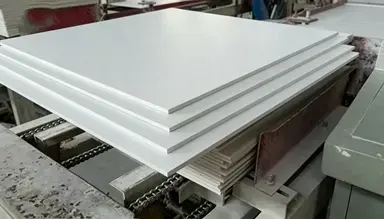
With the advancement of building envelope technologies for energy-efficient green buildings, the construction industry is comprehensively phasing out traditional paper-faced drywall in favor of fiberglass-mat gypsum sheathing—a product involving higher technical barriers.
3.1 Disrupting the biological food chain of *Stachybotrys chartarum* (black mold) in buildings
Traditional paper facings are primarily composed of cellulose; in rainy or high-humidity environments—or when construction schedules are delayed—exposure to moisture turns this cellulosic material into a natural source of inorganic nutrients for mold (such as the highly stubborn black wall mold *Stachybotrys chartarum*).
By incorporating a completely inorganic fiberglass facing mat—where the facing layer consists of pure inorganic silicate fibers—the biomass food chain required for microbial growth is fundamentally eliminated. Combined with a high-density, water-resistant gypsum core, the exterior sheathing achieves the highest possible rating for mold and microbial resistance.
3.2 Interfacial Shear Strength and Thermal Radiation Flame-Retardant Mechanism
In commercial high-rise exterior wall applications, the facing felt must possess an exceptionally high capacity to withstand negative wind loads.
- Interlaminar Shear Strength: Wet-laid fiberglass mats feature an extremely uniform pore distribution. On continuous gypsum board production lines, liquid gypsum slurry penetrates the pores on the underside of the fiberglass mat at a microscopic level; upon crystallization and hardening, it forms a robust mechanical interlocking structure, resulting in an interlaminar shear strength that far exceeds that of paper facings bonded with adhesive.
- Class A Non-combustible Protection: Under extreme fire conditions, the paper facing rapidly chars and burns, whereas the fiberglass mat boasts a melting point exceeding 1,000°C. It tightly encases the gypsum core—which is undergoing dehydration—thereby delaying board rupture and maintaining the fire integrity of the building envelope.
- Industry Benchmarking: Public technical standards from the international exterior wall system giant Georgia-Pacific (DensGlass series) mandate that high-grade exterior wall sheathing must pass a 2-hour Cobb surface water absorption test, with water absorption strictly limited to within 1.0 g.
For projects involving on-site storage, load transfer via screw anchorage, and joint waterproofing details for glass-fiber-reinforced gypsum panels in high-humidity and extreme storm-prone climates, international general contractors typically mandate adherence to the GA-253 installation guidelines issued by the Gypsum Association.
4. FRP and Composite Material Structural Reinforcement
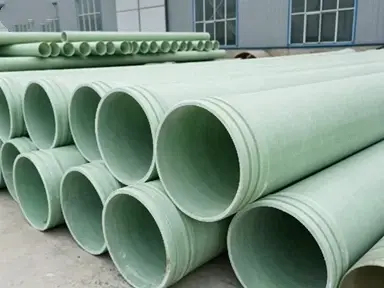
In applications such as chemically resistant piping, filament winding of large industrial storage tanks, and pultrusion of complex, irregularly shaped components, glass fiber mat serves as a critical reinforcing phase that ensures structural longevity against degradation caused by media permeation.
4.1 Passivation and Prevention of Micro-crack Propagation by the Resin-Rich Layer
When fiberglass-reinforced plastic (FRP) components are subjected to internal chemical pressure or external alternating stresses, the cured pure resin layer—due to its high brittleness—is highly susceptible to the formation of microscopic shear cracks under even slight deformation.
In such applications, chopped strand mat (CSM)—characterized by its highly disordered and irregular fiber arrangement—forms a stable barrier layer near the surface exposed to corrosive media (such as the linings of tanks holding strong acids or alkalis). Even if micro-cracks develop within the resin, the stress intensity factor at the crack tip dissipates instantly upon encountering the randomly oriented glass fibers, thereby effectively arresting the catastrophic propagation of the crack.
4.2 Product-category-oriented approach
For various industrial molding processes, purchasing managers can navigate directly to the product line pages featuring our high-specification products based on technical parameters:
- To completely eliminate interlaminar dry spots in hand lay-up or closed-mold vacuum infusion processes, we recommend evaluating our flagship fiberglass chopped strand mat—which features superior localized micro-wetting capabilities—to ensure rapid resin dissolution.
- For highly complex pultrusion processes involving heavy-duty, thick-walled components or for extremely demanding filtration matrices handling high-temperature industrial media, a portfolio of binder-free fiberglass needle mats should be deployed to ensure absolute heat resistance and maximum structural shear strength.
5. Industrial-Grade Technical Comparison Matrix: Fiberglass Mat vs. Fiberglass Cloth
The following table uses quantitative metrics to visually illustrate the differences in technical limits between non-woven fiberglass mats and woven fiberglass cloth in heavy-duty industrial applications:
| Key engineering properties | Fiberglass Mat | Fiberglass Cloth | Decision-making Guidance for Industrial Material Selection |
|---|---|---|---|
| Mechanical distribution pattern | Completely uniform force distribution across the entire 360-degree plane. | Exhibits extremely high strength only along the 0°/90° axes. | If the service environment involves multi-directional stresses or torsional shear forces, fiberglass mat is the preferred choice. |
| Resin-to-Glass Ratio | Due to the porous microscopic structure of the non-woven material, it has a high adhesive absorption capacity. | The woven structure is tight, leaving little space to accommodate resin. | Fiberglass mat is the standard choice for producing “resin-rich anti-corrosion layers” that require resistance to chemical media. |
| Conformity of irregular molds | The fibers are randomly interlaced, allowing them to easily conform and stretch around the corners of complex 3D molds. | Constrained by weft tension, the fabric is highly prone to lifting at acute-angled corners. | For the forming of complex components with multiple curved surfaces, glass fiber mat effectively prevents the formation of resin-rich voids at inner corners. |
| Interlaminar shear resistance | Feather-like fibers provide three-dimensional longitudinal interlocking force. | Due to smooth interlacing, there is a lack of microscopic cross-interlocking between the layers. | Equipment subjected to repeated mechanical vibration or cyclic bending loads often employs a sandwich design featuring alternating layers of glass fiber mat. |
While the matrix above provides the baseline physics of both material classes, operational shop-floor variables often shift the actual project ROI. If your team is navigating complex tooling geometries, evaluating interlaminar fracture toughness, or calculating the hidden costs of resin consumption vs. scrap waste on the production line, we have published a localized engineering breakdown. Read our complete operational assessment: 🔗 [Fiberglass Mat vs. Cloth: Which One Fits Your Project?]
6. B2B Procurement: Global Supply Chain Compliance and Warehouse & Logistics Control
For bulk inorganic silicate materials, cross-border procurement involves not only competition over ex-factory unit prices but also the precise control of material physical stability during lengthy maritime logistics.
6.1 Control Limit for Ex-factory Moisture Content
Due to the presence of numerous hydroxyl groups on their surface, glass fibers exhibit a tendency to absorb moisture. If humidity is not strictly controlled during shipment and within maritime containers, the absorption of even trace amounts of moisture by the raw fibers can trigger microscopic hydrolysis of the coupling agent coating; this leads to a drastic deterioration in the fiber’s compatibility with resin upon arrival at the destination. Manufacturers must strictly limit the core moisture content of glass fiber mats to below 0.2% prior to shipment (in compliance with relevant international testing protocols).
6.2 Optimization of Palletized Heavy-Load Ocean Stowage and Global Compliance
For bulk exports, individual rolls are vacuum-sealed using high-barrier, moisture-proof plastic film and then placed on high-strength, fumigation-free pallets. To ensure compliance with limits on hazardous substances and environmental regulations for cross-border bulk chemical shipments, all supplied materials must undergo periodic audits against the rigorous RoHS and REACH regulatory standards by world-leading testing bodies such as SGS and TÜV SÜD.
7. FAQ: Technical Clarifications for Purchasing Engineers
What are the fundamental differences between powder-bound and emulsion-bound chopped strand mats in hand lay-up and compression molding processes?
The choice depends on the resin matrix used and the requirements for transparency. Powder-bound mats utilize solid unsaturated polyester powder as a binder; this dissolves rapidly in styrene monomer, offering excellent wet-out performance and resulting in composite products with superior optical clarity—making them ideal for applications such as daylighting panels and automotive body parts. In contrast, emulsion-bound mats are produced using a sprayed, cured water-based polyvinyl acetate emulsion; this provides stronger mechanical bonding between the glass strands, minimizing edge fraying or fiber shedding during cutting and lay-up. However, the wet-out rate is slightly slower, and residual emulsifiers result in lower transparency compared to powder-bound mats, making them better suited for standard anti-corrosion storage tanks and heavy-duty, opaque FRP components.
Why do wet-laid fiberglass mats rank significantly higher than dry-laid mats in the construction waterproofing and gypsum board industries?
This is primarily determined by the coefficient of variation of area weight. The wet-laid process resembles papermaking; fibers are dispersed in an aqueous medium via high-speed airflow shear, making it easy to achieve uniform, flat distribution at the level of individual filaments. This results in minimal microscopic variation in area weight and a highly smooth surface, effectively preventing localized coating voids or punctures during asphalt coating or gypsum casting. In contrast, dry-laid processes rely mainly on mechanical carding and air-laid web formation; while suitable for producing thick, heavy (e.g., needle-punched felt) materials for loose thermal insulation or filtration, they cannot match the precision and microscopic uniformity of the wet-laid process when handling the extremely thin base layers (approx. 40–60 g/m²) used in construction materials.
8.References Annex
- ASTM D1668 / D2178 Database: “Organic/Inorganic Non-woven Glass Fiber Felt (Glass Felt) for Asphalt Roofing and Below-Grade Waterproofing.“
- ASTM C1177 Industry Standard: “Standard Specification for Glass Mat Gypsum Substrate for Use as Sheathing.“
- ISO 3374 / ISO 2559 Technical Specification: “Textile-glass-fibre mats — Determination of mass per unit area.“
- NRCA (National Roofing Contractors Association) Official Project Log: “Selecting Reinforcement Bases for Modern Modified Bitumen Membranes to Reduce the Coefficient of Expansion and Prevent Cracking and Blistering in Low-Slope Commercial Roofing.“
- GA (Gypsum Association) Technical White Paper: “Design Specifications for Mechanical Anchorage Load Transfer and Flexible Seal Waterproofing of Prefabricated Glass-Mat Faced Gypsum Exterior Wall Panels in High-Humidity and Severe Storm Environments.“
- ACMA (American Composites Manufacturers Association) Asset Life Report: “Establishing Resin-Rich, Corrosion-Resistant Liners and Arresting Micro-Crack Propagation via Non-Woven Chopped Strand Mat in Pultrusion and Filament Winding Processes.“
- Johns Manville / Owens Corning: Referenced and incorporated insights from their publicly available white papers on nonwoven web-forming processes—specifically the technical report regarding the use of silane coupling agents to modify the surface of continuous silica filaments to reduce microporosity (micro-voids <0.5%) in vacuum injection molding.
- Georgia-Pacific (DensGlass series): This draws upon the company’s core technical benchmarks for high-end international exterior sheathing—specifically, the requirement that the fiberglass facing pass a 2-hour Cobb surface water absorption test and adhere to a strict limit of absolute water absorption of no more than 1.0g.