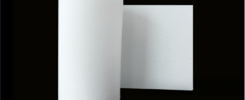
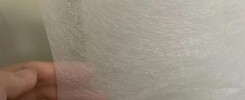
Ceramic fiber paper is a lightweight refractory material manufactured using aluminum silicate ceramic fiber cotton as the raw material, combined with organic binders, via a wet-forming process.
The product features an asbestos-free composition, uniform fiber distribution, excellent machinability, good elasticity, and a low shot content (achieved through four-stage centrifugal shot removal).
Based on service temperature, it is classified into four categories: Standard Type (≤1100°C), High-Alumina Type (≤1200°C), Zirconia-Containing Type (≤1350°C), and Reinforced Type.
It is available in thicknesses ranging from 0.5 to 13 mm, with a density of 180–220 kg/m³. Its thermal conductivity at 800°C is 0.10–0.12 W/(m·K), and its compressive strength is 0.65–0.75 MPa.
In terms of chemical composition, the Al₂O₃ content reaches up to 52% (in the High-Alumina Type), while the ZrO₂ content reaches 15–17% (in the Zirconia-Containing Type).

1. Thermal Performance Parameters
The core advantage of high-alumina ceramic fiber paper lies in its exceptional high-temperature resistance:
- Continuous Service Temperature: Up to 1000–1200°C
- Short-term Peak Temperature: Up to 1400°C (within 30 minutes)
- Thermal Stability: Maintains structural integrity even under repeated thermal cycling
2. Ceramic fiber paper Physical Property Parameters
The physical properties of this material determine its scope of application:
- Thickness Range: 0.5–6 mm (selectable)
- Density Range: 180–220 kg/m³
- Tensile Strength: ≥0.3 MPa (Longitudinal)
- Thermal Conductivity: 0.12 W/(m·K) (at 800°C)

3.Manufacturing Process
Ceramic fiber paper is typically produced using a wet papermaking technique, a process that encompasses steps such as fiber dispersion, forming, and drying.
Key process parameters include fiber length control (typically 3–10 mm), binder addition levels (5–15%), and drying temperature (200–300°C).
Product performance requirements vary depending on the specific application scenario;
for instance, high-temperature environments necessitate a higher alumina content,whereas applications requiring greater flexibility may call for an increased proportion of organic binders.

4. Ceramic fiber paper Application Scenarios
Based on the parameters outlined above, ceramic fiber paper is primarily applied in the following areas:
- Thermal insulation layers for high-temperature equipment
- Linings for industrial furnaces
- Thermal protection systems for spacecraft
- High-temperature isolation for electronic components