Table of Contents
ToggleModern commercial buildings have increasingly stringent requirements for fire compartmentation and weather resistance. Traditional paper-faced gypsum board is facing significant challenges.
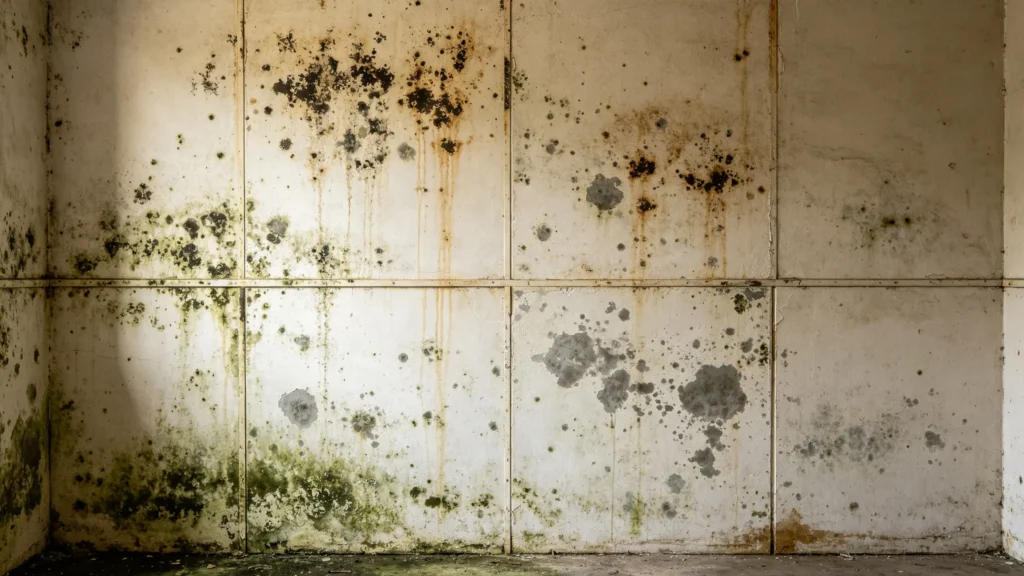
In humid environments or on the exterior walls of high-rise buildings, the paper surface contains organic cellulose. This makes it highly susceptible to mold growth and structural failure.
I. Market Transition & Structural Redefinition
The global construction supply chain is accelerating its industrial upgrading, and fiberglass mat-faced gypsum board has emerged as a new technological alternative.
However, a common manufacturing misconception exists in the building materials industry. Many believe that the physical limits of finished gypsum boards depend on the gypsum mortar in the core.
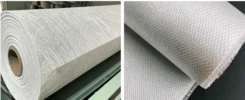
In fact, the key variable determining mold resistance, surface smoothness, and delamination resistance lies in the structural consistency of the nonwoven fiberglass mat used in the glass mat gypsum panels.
II. Fluid Dynamics of Slurry Infiltration: The “Micro-interlocking” Mechanism
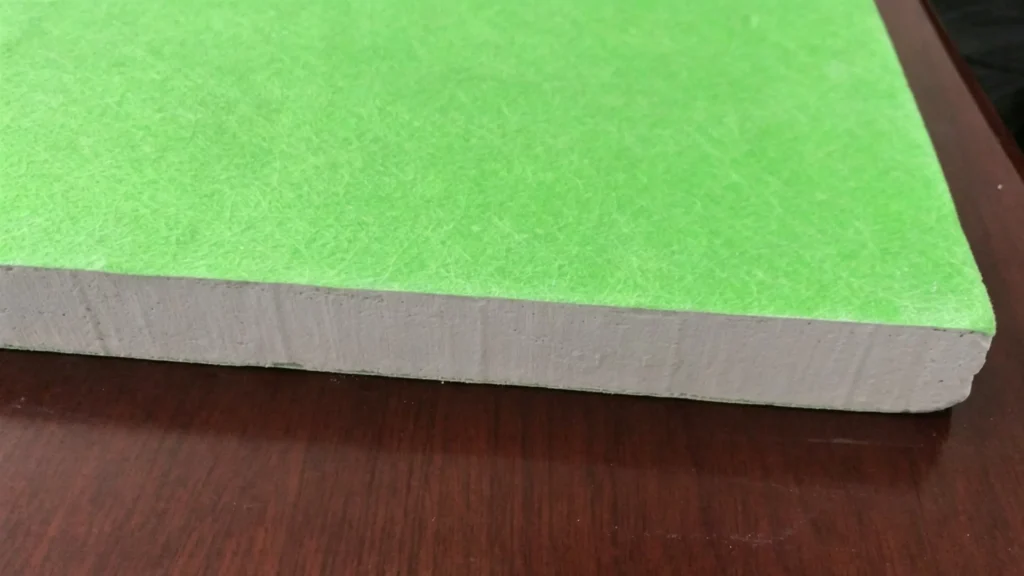
During the manufacturing process, the delamination resistance of fiberglass mat-faced gypsum board depends on the bonding strength between the facing mat and the inner core.
As the gypsum slurry cures, needle-like dihydrate gypsum crystals penetrate and embed themselves into the gaps in the nonwoven fiberglass mesh.
For optimal molding results, fiberglass mats must feature a gradient pore structure design:
- Core-facing interface: This surface requires precise control of air permeability. It needs to achieve “permeable plaster without leakage.” This allows the plaster to embed deeply, establishing a robust mechanical interlocking structure and completely eliminating the risk of delamination and peeling of the finished product.
- Exposed coating surface: The micropores on this surface need to be tightly sealed. It also requires a small amount of hydrophobic coating. This prevents external moisture from penetrating and ensures sufficient and even adhesion of the wall putty and paint during later application.
To more intuitively understand the impact of process differences on microstructure, we can refer to the following physical mechanism comparison table:
| Evaluation Dimensions | Wet-laid glass fiber mat | Traditional dry/Mechanical felt laying | The Influence of Technology on Gypsum Board Molding |
|---|---|---|---|
| Fiber three-dimensional distribution consistency | Extremely high. The water flow dispersion process ensures random distribution at the monofilament level, with no clumps or fiber aggregation. | Medium to low. Airflow or mechanical combing can easily lead to uneven weight distribution and fiber bundles. | This determines the uniformity of gypsum grout penetration. Wet-process felt can prevent gypsum grout from “not being able to penetrate” and causing voids due to excessively high local density. |
| Interlayer peel strength limit | Excellent. The micropores exhibit an open gradient distribution, which is conducive to the deep interlocking of needle-like crystals. | Limited. Due to the uneven distribution of physical pores, crystals can only adhere to the surface and are prone to delamination under shear force. | This directly reduces the risk of delamination. It ensures that the gypsum board does not separate from the core when subjected to external impact or cutting. |
| Multi-directional tensile strength balance | Highly balanced. The longitudinal and transverse strength ratio (MD/CD Ratio) can be precisely adjusted, resulting in excellent tear resistance. | It exhibits a clear directionality. Its longitudinal strength is typically much greater than its transverse strength, while its transverse tear resistance is extremely weak. | Ensures zero breakage on the production line. Capable of withstanding high-intensity tensile stress on a high-speed continuous gypsum board production line. |
III. Thermochemical resistance of binders under high-temperature conditions in continuous drying lines
The production environment on the continuous production line for glass mat gypsum panels is extremely harsh.
Inside the continuous drying kilns, the operating temperature typically ranges from 150°C to 200°C. This is crucial for testing the glass mat material.
Traditional urea-formaldehyde (UF) resins, or low-end acrylic adhesives, have significant drawbacks. They are highly susceptible to thermal degradation under continuous high temperatures. This causes the fiberglass mat to become brittle and its yellowing index to spike.
Furthermore, the subsequent cutting of the finished product generates a large amount of foul dust, leading to technical complaints from construction workers.
The advanced solution employs an environmentally friendly water-based acrylic binder crosslinking system.
This high-end binder formulation exhibits exceptional thermal stability. Even after continuous high-temperature drying, it retains over 90% of its transverse and longitudinal tensile strength.
This not only ensures the flexibility of the felt material but also allows downstream gypsum board plants to safely increase production line speed, thereby releasing capacity.
IV. Empirical Standardization & Global Compliance Framework
When evaluating fiberglass mat-faced gypsum board, the following three global compliance standards are indispensable:
ASTM D3273 (Indoor Coating Anti-Mold Test): High-quality fiberglass mat uses a 100% inorganic glass fiber substrate. It completely cuts off the nutrient source for mold. It easily achieves a perfect score (10 points, zero mold growth) in a 4-week accelerated mold growth environment.
ASTM C1658 / C1177 (Standard Specifications for Fiberglass-faced Gypsum Board): The standards impose strict limits on the water absorption rate (< 5%) and humidified deflection of the finished product. This necessitates that the facing felt must possess extremely high physical dimensional stability.
ASTM E84 (Surface Burning Characteristics Test): Inorganic glass fiber has stable physical properties and natural flame-retardant advantages. It can ensure that the finished product meets the Class A safety standard in terms of flame spread index and smoke developed index.
V. Operational Runnability & Yield Economics
On high-speed, continuous production lines ( fiberglass mat-faced gypsum board), production risks directly impact the factory’s economic benefits.
One of the biggest supply chain risks is “web breakage.” If the longitudinal tensile strength (MD) of the fiberglass mat is insufficient, it will break under high linear speed tension, resulting in losses of tens of thousands of dollars due to production line downtime and cleaning.
Wet forming processes allow for precise control of the longitudinal/transverse tensile strength ratio (MD/CD Tensile Ratio). This gives the mat extremely high mechanical tensile limits, ensuring high yield rates for downstream manufacturers even with increased line speeds.
Furthermore, for mainstream global board sizes (such as 1200mm/1220mm), the source factory can provide precision slitting services (Custom Slitting Capability).
This can help gypsum board factories reduce slitting waste to 0%, achieving refined control over overall production costs.
If you are assessing materials compliance across different sub-sectors, or wish to examine materials specifications from a broader perspective, please refer to our industrial technology guide: [A Comprehensive Guide to Industrial Applications of Fiberglass Mats: Materials Science, Manufacturing Processes, and Global Procurement Specifications]
VII. Elevating Your Production Yield
Solving delamination, strip breakage, and yellowing issues on high-speed gypsum board production lines requires deep technical collaboration at the source of the supply chain.
As a professional manufacturer of wet-process glass fiber materials, we are committed to providing global manufacturers with stable performance, customized widths, and internationally standardized covering solutions.
Whether you are an R&D engineer developing a new generation of high-grade fire-resistant boards or a purchasing manager seeking to reduce waste and improve supply chain stability, our team of technical experts can provide you with comprehensive technical support and free sample testing. Feel free to contact our engineers directly through [Contact Us]. We will provide you with a customized solution tailored to your production line parameters within 24 hours.
Technical Citations & References
- ASTM International. (2024). ASTM C1658/C1658M-19e01: Standard Specification for Glass Mat Gypsum Panels. West Conshohocken, PA: ASTM International.
- ASTM International. (2021). ASTM D3273-21: Standard Test Method for Resistance to Growth of Mold on the Surface of Interior Coatings in an Environmental Chamber. West Conshohocken, PA: ASTM International.
- Johns Manville / Owens Corning Technical Whitepapers. (2025). Microstructural Analysis of Slurry Penetration and Mechanical Interlocking in Nonwoven Fiber Networks. Nonwoven Industry Review, 42(3), pp. 112-125.
- Journal of Non-Crystalline Solids & Building Materials. (2026). Evaluating Cross-Linked Acrylic Binder Degradation and Mechanical Retention Kinetics Under High-Temperature Kiln Profiles. Cement and Concrete Composites, Vol. 148, Article 105432.
- Global Gypsum Magazine. (2025). Yield Optimization: Preventing Web Breakages on High-Speed Wallboard Lines Through Precise MD/CD Tensile Engineering. Global Gypsum Journal, Issue 11, pp. 45-51.