Fiber Glass Tissue for WATERPROOFING & ROOFINGSURFACING SUBSTRATES
- For SBS/APP Membranes & Asphalt Shingles
- Focus: Tensile Stability & Thermal Flow
- SART Series (45g/m2 – 90g/m2)
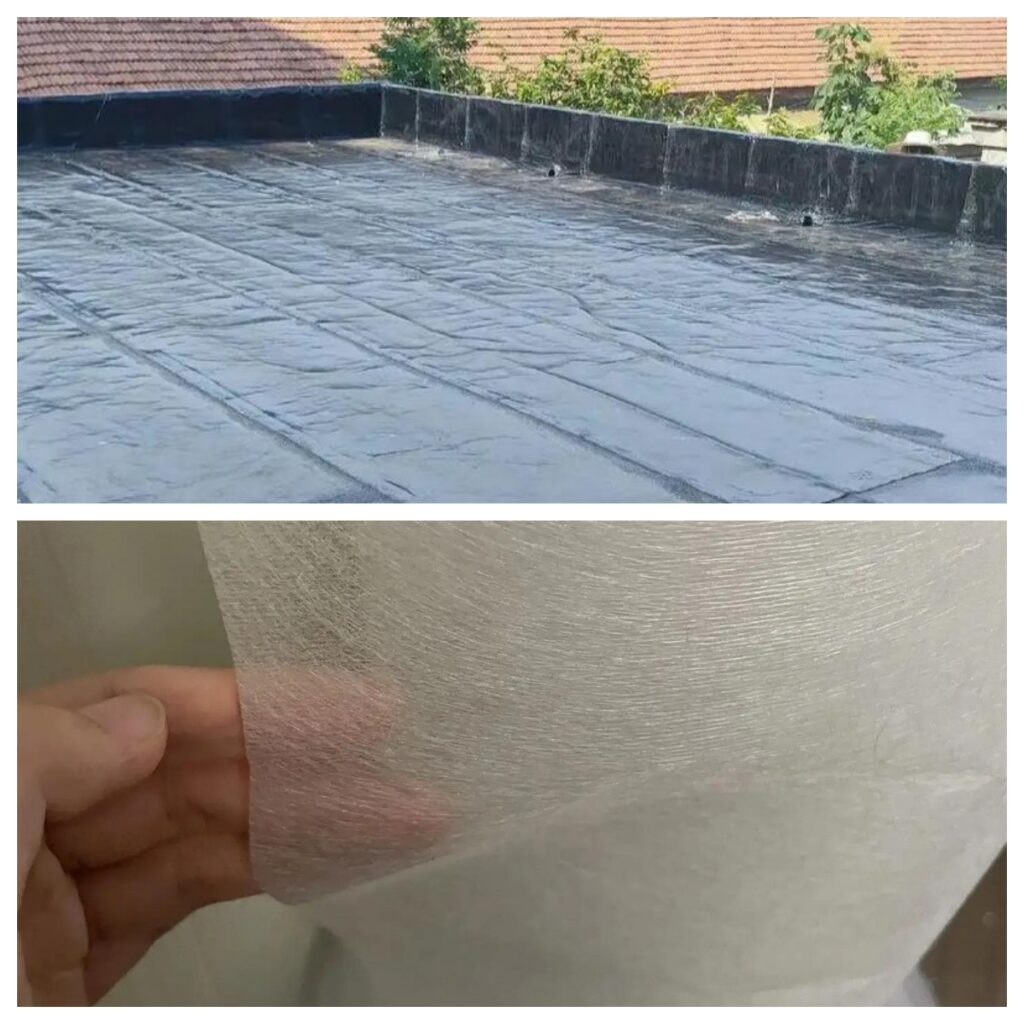
Industrial Fiberglass Roofing Tissue (SART Series)
Our SART wet-laid roofing tissues serve as the foundational backbone for premium SBS, APP, and PVC waterproofing membranes. By combining ultra-uniform fiber distribution with thermal-resistant chemical binder systems, this tissue entirely eliminates the common vulnerabilities of bitumen production: high-temperature bitumen flow during application and low-temperature environmental brittleness.
Engineered Base Mats for Heavy-Duty
Engineered Base Mats for Heavy-Duty Weatherproofing Envelopes provide the high-tensile reinforcement required to eliminate production line tears and guarantee long-term waterproofing performance.
Minimize Line Downtime
Exceptional Machine Direction (MD) and Cross Direction (CD) tensile breaking force prevents web distortion or line breaks under high tension.
Optimized Bitumen Uptake
Engineered for rapid asphalt impregnation, ensuring a continuous, leak-proof barrier.
Extend service life
Extends the service life of underground pipelines and commercial roofs by establishing an inorganic shield against moisture penetration, environmental aging, and chemical soils.
Technical Specifications & Compliance Matrix
All parameters are fully verified against international test frameworks to guarantee batch-to-batch consistency for your QA auditors.
| Product Code | Unit Weight (g/m²) | LOI / Binder Content (%) | MD Tensile Strength (N/50mm) | CD Tensile Strength (N/50mm) | Moisture Content(%) | Standard Compliances |
|---|---|---|---|---|---|---|
| SART45-T15 | 45 | ≤25 | ≥100 | ≥75 | ≤1.0 | ISO 3374 / ISO 1887 |
| SART50 | 50 | ≤25 | ≥170 | ≥80 | ≤1.0 | ISO 3342 / ISO 3344 |
| SART50-T15 | 50 | ≤25 | ≥220 | ≥80 | ≤1.0 | ISO 3342 / ISO 3344 |
| SART60 | 60 | ≤25 | ≥180 | ≥100 | ≤1.0 | ISO 3374 / ISO 1887 |
| SART60-T15 | 60 | ≤25 | ≥240 | ≥120 | ≤1.0 | ISO 3342 / ISO 3344 |
| SART90 | 90 | ≤25 | ≥350 | ≥200 | ≤1.0 | ISO 3374 / ISO 1887 |
| SART90-T15 | 90 | ≤25 | ≥400 | ≥200 | ≤1.0 | ISO 3342 / ISO 3344 |
FRP & COMPOSITES SURFACE MODIFICATION
- For Filament Winding, Hand Lay-Up, and Pultrusion Processing Systems
- SAST Series (30g/m² – 100g/m²)
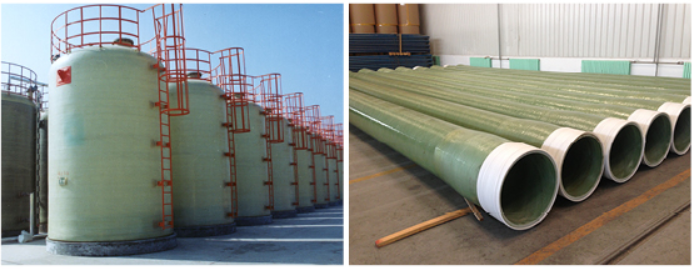
Premium Fiberglass Surface Tissue (SAST Series)
The SAST non-woven series is explicitly engineered to create a resin-rich, ultra-smooth surface layer on fiber-reinforced polymer (FRP) structural profiles. Designed for perfect chemical compatibility across Saturated/Unsaturated Polyester (UP), Epoxy (EP), and Phenolic (PF) resin systems, these tissues act as a protective barrier that seals structural fibers away from aggressive chemical environments.
Filament Winding Series (SAST-W)
Optimized for high-tension automated winding of chemical storage tanks and infrastructure piping. Enhances compressive strength and prevents structural micro-cracking and fluid leaching.
Hand Lay-Up Series (SAST-H)
Formulated with a highly flexible chemical binder system offering exceptional mold conformability (molding property) around complex geometries without wrinkling or folding.
Pultrusion Series (SAST-P)
Engineered with high longitudinal tensile strength to pull smoothly through heated forming dies without tearing, providing pultruded profiles with an isotropic, weather-resistant outer skin.
Technical Specifications & Interfacial Kinetics
Engineered with precision capillary action to guarantee rapid wet-out, minimizing the risk of dry spots and structural voids.
| Product Code | Process Type | Unit Weight (g/m²) | LOI / Binder (%) | MD Tensile Strength (N/50mm) | Penetrating Time (Seconds) | Moisture Content | Testing Standards |
|---|---|---|---|---|---|---|---|
| SAST30-H | Hand Lay-Up | 30 | ≤10 | ≥25 | ≤10 (2 Layers) | ≤0.5 | EN 14118 |
| SAST30-W | Filament Wind | 30 | ≤10 | ≥30 | ≤10 (2 Layers) | ≤0.5 | ISO 3374 |
| SAST50-H | Hand Lay-Up | 50 | ≤10 | ≥40 | ≤15 (2 Layers) | ≤0.5 | ISO 1887 |
| SAST50-W | Filament Wind | 50 | ≤10 | ≥50 | ≤15 (2 Layers) | ≤0.5 | ISO 3342 |
| SAST60-P | Pultrusion | 60 | ≤20 | ≥100 | Immediate Continuous | ≤0.5 | ISO 3344 |
| SAST90-P | Pultrusion | 90 | ≤15 | ≥120 | Immediate Continuous | ≤0.5 | ISO 3344 |
| SAST100-W | Filament Wind | 100 | ≤10 | ≥180 | ≤15 (2 Layers) | ≤0.5 | EN 14118 |
Quality Assurance & Risk Control
- Uniform micro-dispersion of fibers eliminates pinholes, light spots, and localized thin areas, ensuring isotropic mechanical strength in downstream products.
- Suppresses vaporization during high-temperature bitumen impregnation or exothermic resin curing, preventing internal voids and delamination defects.
- Rigorous tracking of tensile strength, binder content (LOI), and curing degree per lot ensures strict technical consistency across mass production runs.
Packaging, and Storage
- Moisture-Proof Export Packaging: Every individual roll is wrapped in heavy-duty PE plastic protective film, creating an airtight moisture barrier.
- Structural Pallet Guarding: Securely bound on reinforced pallets. Our shipping guidelines mandate a maximum 2-layer stacking limit to ensure roll cores remain perfectly round and free from deformation during transport.
- Industrial Storage Parameters: For optimal line runability, keep materials inside intact packaging within our recommended climate parameters:
- Temperature Range: 5°C to 35°C.
- Relative Humidity Profile: 35% to 65% (Prevents pre-hydration of chemical binder systems).