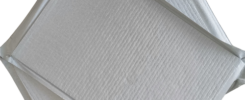
What materials are used to make standard filter paper? Can it filter acids and bases?
Among the most common filtration consumables found in laboratories, standard filter paper ranks as one of the most frequently used materials.
What exactly is filter paper made of? Which solutions can be filtered using it, and which cannot? Will it degrade or break down in acidic or alkaline environments? And what alternative materials should be selected for different filtration scenarios?

1. What Materials Are Ordinary Filter Papers Made Of?
Common qualitative and quantitative filter papers are derived from natural cellulose.
The key characteristics of cellulose-based materials include:
· ✔ Strong Hydrophilicity: Suitable for aqueous systems.
· ✔ Moderate Mechanical Strength: Capable of withstanding a certain degree of negative pressure filtration.
· ✔ High Cost-Effectiveness: Ideal for most basic filtration applications.
· ✘ Susceptible to Strong Acids and Bases.
· ✘ Not suitable for prolonged contact with organic solvents.
Filter papers are classified into two categories:

2. Can Standard Filter Paper Withstand Acids and Bases?
✔ Suitable for: Filtration of weak acids and weak bases
Examples:
· Dilute hydrochloric acid, dilute sulfuric acid
· Most buffer solutions within the pH range of 4–9
✘ Not recommended for: Strong acids, strong bases, and corrosive systems
Including:
· Concentrated sulfuric acid, concentrated nitric acid, aqua regia
· High-concentration NaOH, KOH
· Strongly oxidizing media
Reason: Under exposure to strong acids or bases, cellulose undergoes hydrolysis, disintegration, and fiber breakage; this compromises filtration performance and significantly increases the risk of sample contamination.
3. What Alternative Filtration Materials Should Be Used in Acidic or Basic Systems?(Filter Paper)
Below is a comparative chart illustrating the chemical resistance of various membrane materials.
Chemical Resistance Comparison Table for Common Filter Paper and Membrane Materials

If your experiment involves filtration requirements under highly corrosive or high-temperature conditions, PTFE is the most reliable choice.
4. How to Select Filter Paper or Filter Membranes Based on Experiment Type?(Filter Paper)
① General Aqueous Solutions → Standard Cellulose Filter Paper Suffices
· Solid-liquid separation
· Particulate filtration
· Filtration of routine laboratory waste liquids
② High Particulate Load / High Throughput → Glass Fiber Filter Paper (GF/B, GF/D)
Key Features:
· Depth filtration structure
· Resistant to clogging
· Withstands high temperatures and corrosive solutions
③ Strong Acids / Strong Bases, Organic Solvents → PTFE Membranes
④ Microbiological Testing → Mixed Cellulose Ester (ME) Membranes (0.45 μm)
Applications: Food analysis, drinking water testing, coliform counting
⑤ Environmental Particulate Analysis, Microplastics Research → PC Track-Etched Membranes
Rationale: Precise pore size and cylindrical pore structure facilitate microscopic observation

5. Premium Domestic SelectionFilter Paper
· Comprehensive Product Line: Covering the full spectrum of filtration media—including cellulose filter paper, quantitative filter paper, glass fiber filter paper, and membrane materials such as PTFE, Nylon, PES, and RC.
· Strong Chemical Compatibility: Notably, the PTFE and glass fiber series demonstrate stable performance during the filtration of acids, bases, and organic solvents.
· High Batch-to-Batch Consistency: Meets the rigorous requirements for reproducibility and reliability demanded by scientific research, pharmaceutical companies, and food quality control sectors.
· Excellent Cost-Effectiveness: Significantly reduces per-unit costs across a wide range of routine filtration and quality control workflows.
· Versatile Applications:Protein Filtration、Environmental Monitoring、Food Microbiological Testing、Routine Laboratory Sample Clarification.