This article is designed specifically for R&D and quality control engineers at global manufacturers of fiberglass mat shingles.
An in-depth analysis of how—through the rigorous control of the physicochemical properties of the base fiberglass mat during continuous mass production—manufacturers can ensure from the source that finished products successfully pass the ASTM D3462 tear test, UL 790 Class A fire rating, and FM 4470 wind uplift test, while completely eliminating critical industrial pain points such as mat breakage on the production line and product delamination.
1.Asphalt Shingle Skeleton Structure: Materials Science of Non-woven Fiberglass Mats
1.1 Statutory Status of the Wet-Laid Process in Asphalt Shingle Base Mats
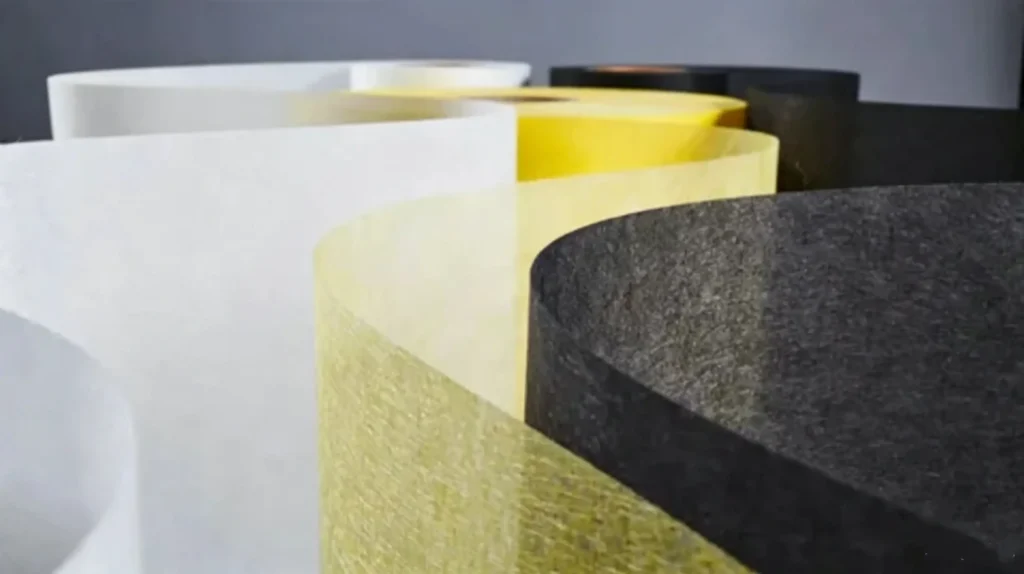
In the manufacturing system for modern, high-strength asphalt shingles, the fiberglass mat—which serves as the core structural material—must be produced using the wet-laid process.
Traditional dry-laid needle-punching or mechanical web-forming processes result in highly uneven stress distribution (high coefficient of variation) between the machine direction and the cross-machine direction of the initial mat, due to poor spatial fiber orientation.
In contrast, the wet-laid process involves uniformly dispersing chopped glass fibers in an aqueous suspension containing a polymeric dispersing agent, followed by instantaneous web formation on a conveyor belt via vacuum filtration.
This manufacturing process imparts a non-directional, randomly interlaced network structure (isotropic matrix) to the non-woven fiberglass substrate, ensuring the base mat possesses completely isotropic and uniform porosity.
During the subsequent multi-stage dip-coating process, the molten modified bitumen fully penetrates and saturates the entire fiberglass mat within a fraction of a second; this fundamentally eliminates the risk of blistering and degradation in the finished asphalt shingles caused by water absorption within internal dry fiber layers.
1.2 The Art of Formulating High-Temperature Thermosetting Binders
A plain fiberglass non-woven mesh possesses no mechanical strength after dewatering; therefore, its mesh structure must be locked in place through continuous spraying, impregnation with a chemical binder, and cross-linking/curing in a high-temperature oven.
For the specialized base mat used in asphalt shingles, the chemical formulation of the binder typically employs an emulsion blend of cross-linked urea-formaldehyde (UF) resin and modified acrylic resin:
- Urea-formaldehyde resin: Provides exceptional microscopic rigidity and static tensile strength, as well as excellent cost-effectiveness.
- Modified acrylic resin: Acts as a flexibility modifier to mitigate the excessive brittleness of the resin after curing, thereby enhancing the shingle’s resilience against bending and mechanical impact.
The Loss on Ignition (LOI) must be strictly controlled within the range of 15% to 22%.
An excessively low LOI (insufficient resin content) makes fiber bonding points highly susceptible to microscopic slippage, thereby reducing the longitudinal tensile strength of the base mat.
Conversely, an excessively high LOI results in the formation of a continuous, sealed binder film that completely blocks capillary micropores, preventing the modified asphalt from achieving full saturation through impregnation.
2. How to Prevent "High-Speed Production Line Network Disconnection" by Controlling Raw Material Specifications
2.1 Hot Tensile Retention at 200°C
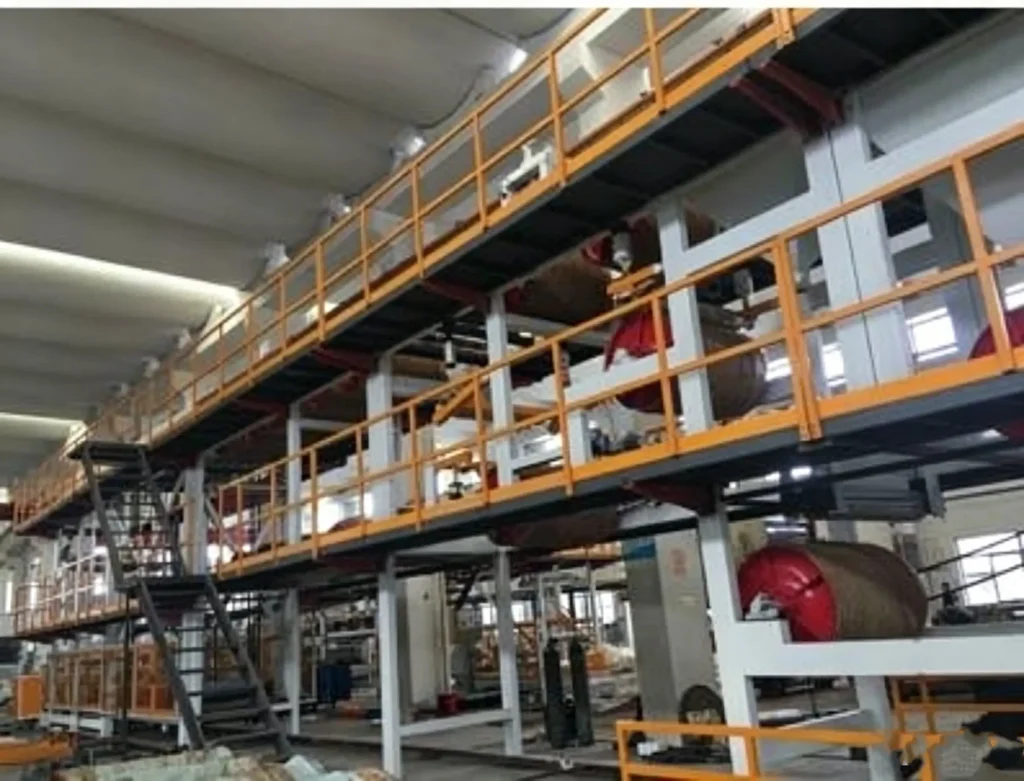
For continuous, highly automated modified asphalt coating lines operating at speeds exceeding 120 meters per minute, a web break is the most dreaded disaster.
Such an incident typically results in a complete production stoppage lasting several hours and entails extremely high levels of scrap waste.
2.2 Asphalt Compatibility and Capillary Wet-out Velocity
The production efficiency of high-speed asphalt coating lines essentially depends on the capillary wet-out velocity of the base mat.
Modified asphalt contains significant amounts of high-viscosity polymers (such as SBS or APP) and a high proportion of inorganic fillers (e.g., calcium carbonate or talc).
To ensure this high-viscosity fluid fully saturates and wets the base mat within an extremely short contact time, the sizing agent on the fiberglass surface must possess exceptional surface activity and interfacial rheological compatibility.
If the interfacial coupling agent formulation is mismatched, microscopic repulsion occurs between the asphalt and the fibers; consequently, while the surface may appear fully coated, substantial microscopic voids (“dry voids”) remain within the material.
After the finished product leaves the factory, these hidden “dry spots” can evolve into large-scale delamination defects under prolonged sun exposure, driven by the mismatch in thermal expansion and contraction coefficients between the various material layers.
No theoretical parameters can replace actual production line trials. We fully understand the importance of a stable modified asphalt coating line to your operations. If you are facing issues such as intermittent web breaks during high-speed production, blistering in the finished product, or insufficient penetration rates, our application engineers can provide you with a customized, one-on-one formula optimization.
Contact our materials experts to request free samples for line trials. We can fine-tune the product based on your production line speed (e.g., 120 m/min+) and resin mixing ratio.
3. Three major international standards determining the service life of finished asphalt shingles
3.1 Breaching the "Red Line" of Fragmentation
In tender projects adhering to US standards, ASTM D3462 serves as a critical material standard where non-compliance results in automatic disqualification.
This standard mandates that the longitudinal and transverse pendulum tear strength of finished asphalt shingles must not fall below 1,700 grams (i.e., 16.7 N).
The physical resistance to tearing relies entirely on the shear resistance provided by the interlaced network structure of the internal non-woven fiberglass mat. When the shingle is subjected to a concentrated external tearing force, the randomly distributed chopped fibers spontaneously disperse the concentrated stress laterally across the fiber cross-junctions.
Only when the mat’s area weight is optimally designed—and the fiber cross-junctions are sufficiently numerous and securely bonded—can the finished shingle reliably exceed the compliance threshold of 1,700 grams.
3.2 Secure Class A fire rating
Modern high-end residential and commercial buildings impose extremely stringent fire-resistance rating requirements on roofing systems, typically mandating compliance with the highest fire rating under UL 790.
Unlike traditional asphalt shingles with paper-based or wood-fiber cores, fiberglass mats consist of a completely inorganic, non-woven silica framework with a physical melting point well above 1,000°C.
In simulated Intermittent Flame Tests and flame spread tests, although the surface layer of modified asphalt undergoes carbonization and combustion, the underlying inorganic fiberglass mat retains its continuous, dense mesh structure without rupturing or shrinking.
This robust inorganic barrier effectively blocks the transmission of external thermal radiation and open flames to the wooden roof deck beneath, buying critical time for the building’s fire-safety response.
3.3 Nail-head pull-through resistance
In accordance with the ASTM D7158 standard, high-end asphalt shingle systems must be capable of withstanding extreme typhoon-force winds and wind-uplift loads of up to 150 mph (approximately 240 km/h).
According to official technical literature from the Asphalt Roofing Manufacturers Association (ARMA), when high winds generate significant negative wind pressure that lifts the shingles, all mechanical stress concentrates at the fastener line—the points where the shingles are nailed down.
Under this macro-level concentrated shear stress, whether a shingle is torn directly through by the nail head and blown away depends entirely on the microscopic “fastener pull-through resistance” of the fiberglass mat surrounding the nail hole.
A high-quality fiberglass mat ensures that the fiber matrix around the nail hole undergoes uniform elastoplastic deformation when subjected to stress, thereby delaying the microscopic initiation and propagation of cracks.
4. Matrix of Core Technical Parameters for Global Manufacturers
The following matrix lists the standard control parameters for specialized fiberglass mats used in high-performance asphalt shingles:
| Key indicators | Testing Standards | Reference value | Impacts of Asphalt Shingle Manufacturing |
|---|---|---|---|
| Mass per unit area (Area Weight) | ASTM D3776 / ISO 3374 | 80 g/m² – 120 g/m² | Regarding the overall rigidity of the finished shingle, a basis weight that is too low can cause web breaks on high-speed production lines, while one that is too high hinders complete asphalt saturation and impregnation. |
| Resin Loss on Ignition (LOI) | ASTM D2584 | 15.0% – 22.0% (±1.5%) | Determining the balance point between the microscopic rigidity and porosity of the substrate directly affects the rate of asphalt absorption. |
| Ex-factory moisture content | ISO 3344 | ≤0.2% | Mandatory upper limit on specifications. Prevents premature chemical hydrolysis of the coupling agent caused by the micro-scale hygrothermal environment. |
| Tensile strength in the machine direction (MD) at room temperature | ASTM D5035 | ≥420 N / 50mm | Resist the immense mechanical tensile stresses generated during the start-up, acceleration, and winding stages of the continuous production line. |
| Tensile strength in the cross direction (CD) at room temperature | ASTM D5035 | ≥280 N / 50mm | Ensure that the finished tiles do not undergo edge stretching deformation or edge curling on the multi-layer lamination line. |
| High-temperature tensile retention rate (200°C) | Industry-specific customized hot-air oven method | ≥85% | Simulating the actual mechanical retention rate of the base mat as it passes through the 200°C modified bitumen coating bath is the key indicator for determining the point of web breakage. |
5. Quality Compliance "Red Lines" for Large-Scale Cross-Border Procurement
5.1 Dual Market Access in Europe: EN 544 and EN 1107-1
If you intend to sell your finished asphalt shingles in the EMEA (Europe, the Middle East, and Africa) market, European engineers—when conducting bulk procurement for projects—will mandate compliance with the EN 544 European standard.
Under this standard system, the purchaser’s engineers require an additional test for dimensional stability in accordance with EN ISO 1107-1.
This test mandates that, following exposure to alternating high and low-temperature cycles (typically involving continuous baking in an 80°C oven), the mechanical shrinkage of the fiberglass mat in both the longitudinal and transverse directions must be strictly controlled to within 0.1%.
If the dimensional stability of the base material fails to meet these requirements, the finished asphalt shingles—after prolonged exposure to diurnal temperature cycles on the roof—may undergo thermal creep shrinkage, resulting in severe thermal wrinkling across the entire roof surface.
5.2 Asset/Premium Rating: FM Global Approvals 4470 Acceptance Criteria
In the tendering process for the construction of large-scale international industrial plants and modern logistics and warehousing centers, project owners often require roofing materials to be certified under FM Approvals 4470.
As a rigorous certification system led by a world-leading commercial insurance company, FM-certified roofing can significantly reduce a property owner’s annual commercial property insurance premiums.
The FM system imposes extremely stringent criteria for evaluating resistance to Severe Hail (SH) impacts.
It requires the fiberglass non-woven mat within the shingle to possess an exceptionally high cross-shear energy-absorption modulus, enabling it to withstand repeated impacts from 51mm-diameter hailstones traveling at 32 m/s without the inorganic skeleton suffering micro-fractures or punctures.
5.3 Quality Control System of International Independent Third-Party Authoritative Laboratories
In building trust within cross-border supply chains, material suppliers should regularly submit materials to internationally recognized, independent third-party notified bodies for comprehensive testing.
PRI Construction Materials Technologies: Based in Florida, USA, this is a globally recognized independent laboratory and a leading technical authority in the testing of asphalt rheology, roofing systems, and non-woven fabric substrates.
Intertek: A designated laboratory specializing in compliance audits for large-scale building envelope systems and the issuance of authoritative reports.
6. FAQ: Clarification of Common Technical Questions Regarding Asphalt Shingle Base Mat Procurement
To reduce procurement costs, is it possible to produce fiberglass mat shingles that meet international tender specifications by sourcing fiberglass mats with a slightly lower basis weight (e.g., 75 g/m²)?
That is absolutely out of the question. This represents a classic blind spot in B2B procurement understanding. Modified bitumen itself serves only to provide waterproofing and ballast; without a high-quality fiberglass mat acting as the core reinforcement, the finished product would fail to meet the critical 1,700-gram pendulum tear strength threshold mandated by ASTM D3462. Furthermore, using a mat that is too thin results in insufficient hot tensile strength during high-speed continuous production, leading to web breakage—a scenario where the risks far outweigh any potential gains.
How can the "bitumen compatibility" and "capillary absorption rate" of different batches of raw glass fiber mats be rapidly determined through simple incoming quality control (IQC) procedures?
The industry-standard modified asphalt micro-droplet wetting test (Asphalt Contact Angle & Capillary Rise Test) can be employed. Quality control engineers can heat standard modified asphalt to 180°C in the laboratory and use a micro-syringe to deposit a 0.05g droplet onto the surface of the fiberglass base mat being tested. A high-magnification industrial microscope or a contact angle goniometer is then used to record the time required for the droplet to fully penetrate the mat (wet-out time). For a standard, highly compatible base mat, the complete wetting time should typically be less than 1.5 seconds.
7.References Inventory
- ASTM D3462 / D3462M-23 – Standard Specification for Asphalt Shingles Made from Glass Felt and Surfaced with Mineral Granules. Regulates the minimum tear resistance (1700g) and physical integrity of fiberglass-based roofing shingles. Available via the ASTM International Portal.
- UL 790 (Sixth Edition) – Standard for Tests for Fire Resistance of Roof Covering Materials. Underwriters Laboratories’ core baseline validating the Class A fire-retardant capabilities of inorganic fiberglass substrates in multi-layered structural systems. Technical data insights hosted by the UL Standards Association.
- ARMA Technical Bulletin #211-RR-18 – The Structural Advantages of Fiberglass Mat Technology in Modern Laminated Asphalt Shingles. The Asphalt Roofing Manufacturers Association’s formal directive detailing dimensional stability and wind-load performance optimization. Sourced from the Asphalt Roofing Manufacturers Association (ARMA).
- EN 544:2011 – Bitumen shingles with mineral and/or synthetic reinforcements — Product specification and test methods. The European harmonized standard governing the dimensional stability, water absorption profiles, and mass-per-unit-area consistency for the EMEA procurement vector. Sourced from the European Committee for Standardization (CEN).
- FM Property Loss Prevention Data Sheet 1-28 / 1-29 – Wind Design and Roof Systems / Hail Damage Evaluation for Commercial Insured Assets. Factory Mutual Global’s rigid engineering guidelines defining Severe Hail (SH) impact absorption and fastener pull-through resistance limits for base non-woven glass carriers. Available via FM Approvals Standard Portal.
- EN ISO 1107-1 – Flexible sheets for waterproofing — Determination of dimensional stability — Part 1: Bitumen sheets for roof waterproofing. Global test methodology benchmarking longitudinal and transverse shrinkage criteria to eliminate thermal wrinkling under diurnal cycling. Sourced from the International Organization for Standardization (ISO).
7.References Inventory
- ASTM D3462 / D3462M-23 – Standard Specification for Asphalt Shingles Made from Glass Felt and Surfaced with Mineral Granules. Regulates the minimum tear resistance (1700g) and physical integrity of fiberglass-based roofing shingles. Available via the ASTM International Portal.
- UL 790 (Sixth Edition) – Standard for Tests for Fire Resistance of Roof Covering Materials. Underwriters Laboratories’ core baseline validating the Class A fire-retardant capabilities of inorganic fiberglass substrates in multi-layered structural systems. Technical data insights hosted by the UL Standards Association.
- ARMA Technical Bulletin #211-RR-18 – The Structural Advantages of Fiberglass Mat Technology in Modern Laminated Asphalt Shingles. The Asphalt Roofing Manufacturers Association’s formal directive detailing dimensional stability and wind-load performance optimization. Sourced from the Asphalt Roofing Manufacturers Association (ARMA).
- EN 544:2011 – Bitumen shingles with mineral and/or synthetic reinforcements — Product specification and test methods. The European harmonized standard governing the dimensional stability, water absorption profiles, and mass-per-unit-area consistency for the EMEA procurement vector. Sourced from the European Committee for Standardization (CEN).
- FM Property Loss Prevention Data Sheet 1-28 / 1-29 – Wind Design and Roof Systems / Hail Damage Evaluation for Commercial Insured Assets. Factory Mutual Global’s rigid engineering guidelines defining Severe Hail (SH) impact absorption and fastener pull-through resistance limits for base non-woven glass carriers. Available via FM Approvals Standard Portal.
- EN ISO 1107-1 – Flexible sheets for waterproofing — Determination of dimensional stability — Part 1: Bitumen sheets for roof waterproofing. Global test methodology benchmarking longitudinal and transverse shrinkage criteria to eliminate thermal wrinkling under diurnal cycling. Sourced from the International Organization for Standardization (ISO).