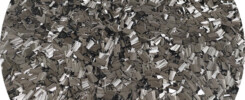
Para-aramid pulp
Aramid pulp is made from para aramid fiber whose composition is poly(para-phenylene terephthalamide).
After a series process of cutting, grinding and suspending in water, the fiber is fibrillated into aramid pulp.

The pulp not only inherits the high-strength, high-modulus, high-temperature resistance, abrasion resistance and excellent chemical stability from para-aramid fiber, but also has high dispersibility, specific surface area and grip force to provide reinforcement and viscosity control under shear stress.
Para-aramid pulp is widely used in high-performance friction and sealing field, increasing its effect and service life significantly.
C.S.F. | Specifie Surface Area | Moistare Content | Average Length | Thermal Decomposition Temp | |
[ml] | [m²/g] | [%] | [mm] | [℃] | |
SA230 | 320-420 | 7-10 | 7 | 0.6-0.8 | 550 |
SA240 | 420-500 | 9-15 | 7 | 0.6-1.0 | 550 |
SA250 | 500-800 | 9-14 | 7 | 0.8-1.2 | 550 |
SA260 | 600-880 | 8-13 | 7 | 1.0-1.4 | 550 |
Precipitated Meta-aramid Fiber
Precipitated Meta-aramid fiber is an aromatic meta-polyamide film-like fibrid material. Meta-aramid precipitated fibers are 4-7 micrometers thick and 80-600 micrometers long, exhibiting excellent thermal stability, flame retardancy, electrical insulation, and chemical stability.
They are easily compounded with other materials and are widely used in the production of aramid paper, battery separators, and non-woven fabrics.
They are essential basic materials in high-tech fields such as aerospace, aviation, energy, electronics, communications, and environmental protection.
Precipitated Meta-aramid fiber consists of regularly arranged serrated macromolecules that decompose before melting.

Its glass transition temperature is 270℃, and it does not undergo significant decomposition or carbonization below 350℃. When the temperature exceeds 400℃, the fiber gradually becomes brittle, carbonizes, and eventually decomposes, but does not produce molten droplets.
It does not propagate flame in a flame and has good flame retardancy. With a limiting oxygen index (LOI) of 28, it exhibits excellent performance, excellent high-temperature resistance, good dimensional stability, and excellent spinnability, fire resistance, and corrosion resistance.
Product specifications: intrinsic viscosity ≥1.8, moisture content ≤20%, initial freeness 50°SR, heat shrinkage rate at 200℃ ≤20%.
| Specification | C.S.F. | Specific Surface Area | Moisture Content | Average Length | Thermal Decomposition Temperature | Packing |
| [ml] | [m2/g] | [%] | [mm] | [℃] | kg/bag | |
| SA 230 | 320-420 | 7-10 | 7 | 0.6-0.8 | 550 | 5 |
| SA 240 | 420-500 | 9-15 | 7 | 0.6-1.0 | 550 | 5 |
| SA 250 | 500-800 | 9-14 | 7 | 0.8-1.2 | 550 | 5 |
| SA 260 | 600-880 | 8-13 | 7 | 1.0-1.4 | 550 | 5 |
Application areas

Aramid paper

Lithium battery separator

non-woven fabric

Aramid honeycomb