A desiccant rotor can lose dehumidification efficiency even when the adsorbent chemistry appears unchanged. The cause may be uneven adsorbent loading, damage during corrugation, dimensional change under humid conditions, or gradual weakening during regeneration cycles. In each case, the fiberglass paper substrate deserves closer attention.
The substrate is not simply a carrier. Its pore structure, binder system, dry and wet strength, basis weight, thickness, and roll dimensions influence how reliably the rotor can be coated, formed, assembled, and operated. This guide explains the properties buyers and engineers should evaluate when selecting fiberglass paper for desiccant rotors.
Why the Desiccant Rotor Substrate Matters
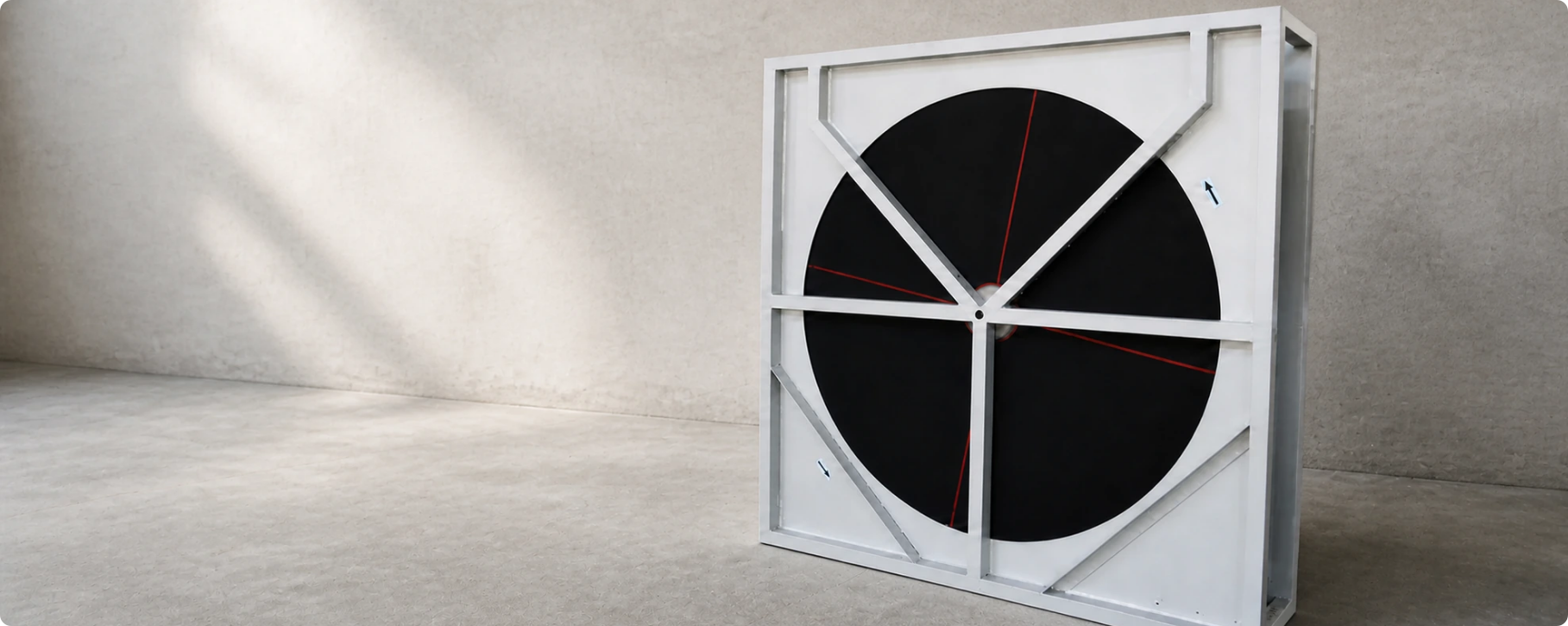
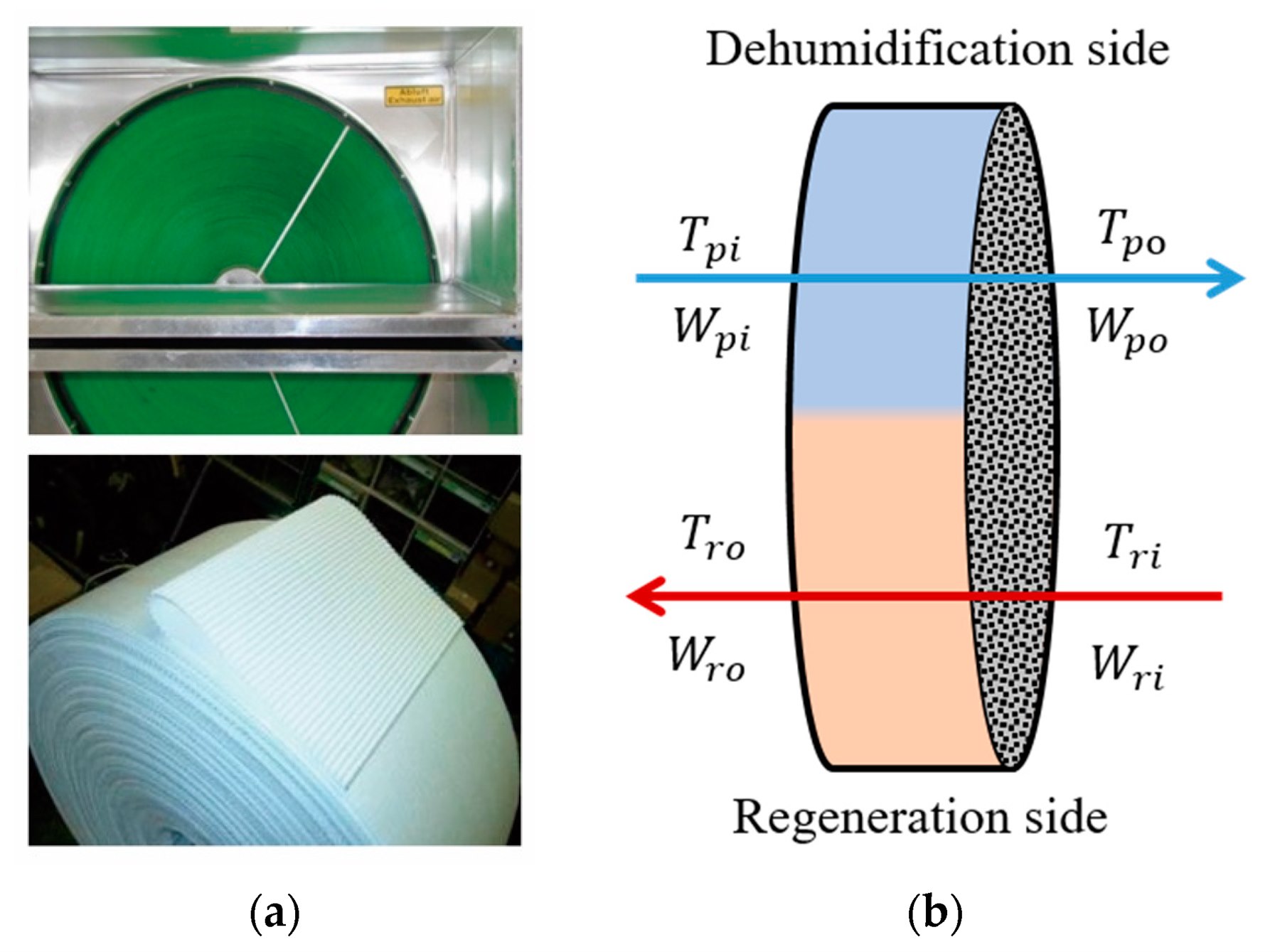
In a finished wheel, the substrate forms the corrugated and flat layers that create thousands of air channels. It must accept the desiccant formulation evenly, retain sufficient strength during wet processing, form clean flutes, and remain stable during repeated adsorption and regeneration conditions.
| Substrate Property | What It Influences |
|---|---|
| Pore uniformity | Distribution and consistency of adsorbent loading |
| Dry tensile strength | Web handling, corrugation, winding, and cutting |
| Wet tensile strength | Resistance to damage during coating and humid cycling |
| Loss on ignition (LOI) | A test-dependent indication of mass lost on heating, often associated with binder or other volatile content |
| Basis weight and thickness | Formability, mechanical reserve, channel geometry, and potential pressure-drop trade-offs |
| Width and roll consistency | Line compatibility, yield, splicing frequency, and process stability |
1. Start with Pore Uniformity, Not Only Average Porosity
The desiccant slurry must penetrate and distribute across the glass fiber network without leaving locally starved or overloaded areas. An average porosity value alone does not show whether the pore structure is consistent across the web or from roll to roll.
Poor local uniformity can contribute to coating variation, blocked channels, dusting, or uneven air resistance. Evaluation should therefore combine supplier data with a coating trial and inspection of the finished web or rotor segment.
What to Verify
- Visual and microscopic uniformity across the roll width
- Coating pickup and add-on consistency under your own slurry conditions
- Absence of dense spots, holes, fiber bundles, and edge defects
- Consistency between sample rolls and production lots
2. Interpret Loss on Ignition in the Correct Test Context
Loss on ignition (LOI) is the percentage of mass lost when a specimen is heated under a defined test method. In glass fiber paper, it can be used as an indirect process-control indicator for binder and other combustible or volatile constituents. It should not be treated as a universal binder-content value unless the supplier has established that relationship for the specific product and method.
For the Saxobran evaluation grade described below, an LOI range of 7–9% is used as a typical control window. Buyers should confirm the test method, tolerance, and relevance to their regeneration conditions before comparing figures from different suppliers.
3. Review the Binder System for Regeneration Stability
Desiccant rotors are repeatedly exposed to warm, humid adsorption conditions and higher-temperature regeneration air. The binder system helps hold the glass fiber network together throughout coating, corrugation, assembly, and service.
An inorganic binder system can support dimensional and structural stability where repeated heating is expected. However, actual performance depends on the complete paper formulation, desiccant chemistry, regeneration temperature, cycle profile, and rotor design. Qualification testing should reproduce the intended operating conditions rather than rely on binder type alone.
4. Specify Both Dry and Wet Tensile Strength
Dry tensile strength helps the paper pass through unwinding, coating, corrugating, winding, and cutting operations. Wet tensile strength becomes critical when the substrate contacts an aqueous or solvent-based desiccant formulation and when the finished wheel experiences moisture cycling.
A paper that performs well when dry may soften excessively during coating. This can lead to web breaks, distorted flutes, stretching, or edge damage. Request values in both machine direction and cross direction where available, together with the test method and conditioning procedure.
Useful Questions for the Supplier
- Are dry and wet tensile results reported for every production lot?
- Which test method, sample width, and conditioning conditions are used?
- How much lot-to-lot variation is permitted?
- Can the supplier provide a certificate of analysis (COA) with the shipment?
5. Match Basis Weight and Thickness to the Rotor Design
Basis weight and thickness affect more than paper cost. They influence the mechanical reserve available during corrugation, the shape and stability of air channels, coating pickup, finished wheel mass, and potentially pressure drop. The optimum grade depends on flute geometry, rotor diameter, corrugating conditions, desiccant loading, and target airflow.
For many customer evaluations, Saxobran starts with a 30 g/m² grade at 225 mm width. This is a practical reference point, not a universal benchmark. Wider basis-weight options may be considered when the application requires greater strength or different forming behavior.
Typical Evaluation Grade
The following values summarize one commonly evaluated Saxobran grade. Final purchasing specifications should be confirmed in the current technical data sheet and lot-specific COA.
| Property | Typical / Controlled Value | Why It Matters |
|---|---|---|
| Basis weight | 30 g/m² | Lightweight starting point for many rotor evaluations |
| Thickness | 0.28 mm | Influences corrugation geometry and coating behavior |
| Loss on ignition | 7–9% | Product-specific process-control window; confirm test method |
| Dry tensile strength | ≥65 N/5 cm | Supports web handling and converting |
| Wet tensile strength | ≥35 N/5 cm | Supports coating and moisture exposure |
| Standard width | 225 mm | Common Saxobran supply format for evaluation |
| Available basis-weight range | 30–75 g/m² | Allows application-specific grade selection |
| Fiber / binder system | E-glass fiber with inorganic binder | Designed for a stable porous glass fiber network |
For current supply forms, evaluation grades and custom roll options, see our desiccant rotor fiberglass paper product page.
6. Confirm Roll Dimensions and Converting Consistency
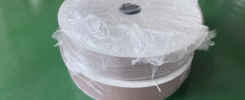
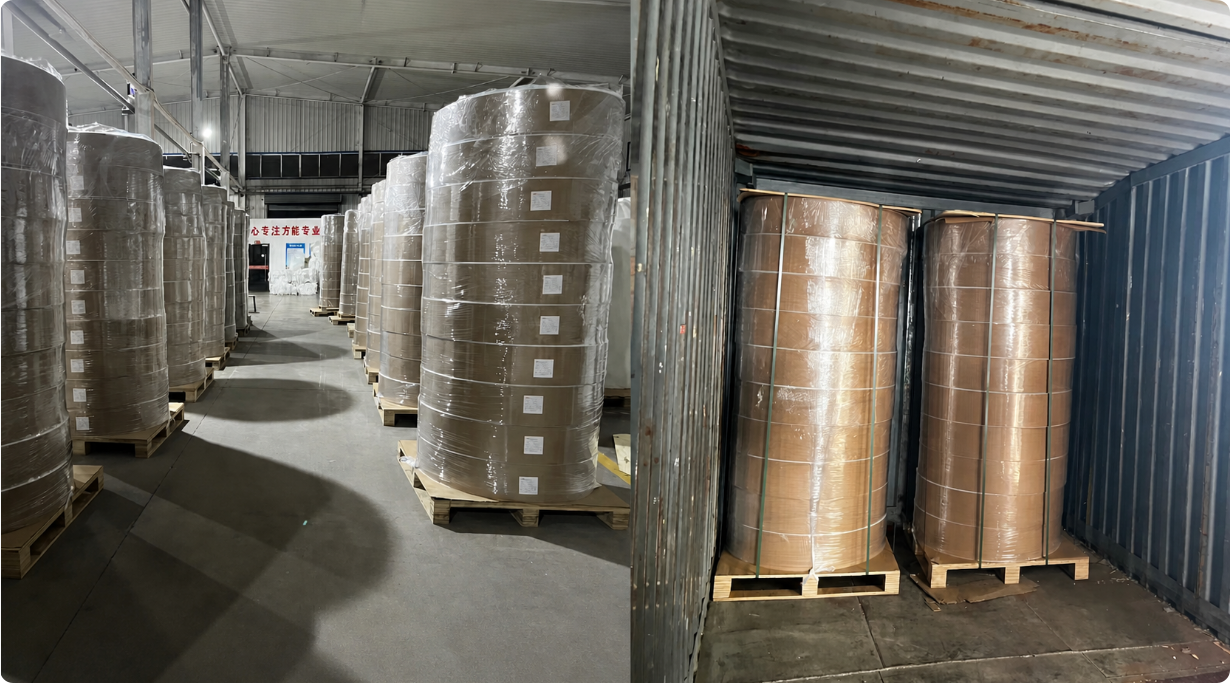
Even a suitable paper formulation can create production losses if width, edge quality, winding, splices, or roll-to-roll variation are not controlled. Before approval, confirm the usable width, roll length, core size, winding direction, packaging, splice policy, and tolerance for each critical dimension.
For continuous rotor production, buyers should also inspect edge straightness, telescoping, wrinkles, and visible web defects. These practical details directly affect line uptime and material yield.
7. Use a Staged Qualification Plan
A technical data sheet is necessary, but it cannot replace a process trial. The most reliable qualification program moves from material verification to lab coating, converting, and full operating conditions.
- Document review: confirm grade, basis weight, thickness, width, LOI method, dry/wet tensile methods, tolerances, and COA format.
- Laboratory trial: use approximately 100–200 m when appropriate for coating pickup, drying, adhesion, and preliminary corrugation checks.
- Production trial: use around 500 m when appropriate to evaluate web handling, line continuity, flute quality, cutting, and assembly.
- Rotor validation: measure pressure drop, dehumidification performance, dimensional stability, dusting, and durability under the intended adsorption/regeneration cycle.
Sample quantities are application-dependent. Confirm the minimum length required by your coating and corrugating equipment before ordering.
Supplier Qualification Checklist
- Product is designed and controlled for desiccant rotor or comparable high-temperature porous-substrate use.
- Supplier can identify the glass fiber and binder system.
- Pore structure and coating consistency have been evaluated on the buyer’s formulation.
- Dry and wet tensile values include methods and tolerances.
- LOI is reported with a defined test method and product-specific range.
- Basis weight, thickness, width, winding, splices, and packaging are specified.
- Each lot can be supplied with agreed quality documentation, including COA items.
- The supplier can support laboratory samples and a controlled production trial.
For a broader view of Saxobran’s manufacturing capabilities, see our wet-laid nonwoven product range.
Frequently Asked Questions
What type of fiberglass paper is used in a desiccant rotor?
A porous wet-laid glass fiber paper is commonly used as the corrugated and flat substrate. The correct grade must combine coating compatibility, formability, wet strength, thermal stability, and controlled dimensions.
What basis weight should I choose?
There is no single basis weight for every rotor. A 30 g/m² grade can be a useful starting point for evaluation, while the final choice depends on flute geometry, corrugation, desiccant loading, airflow, strength, and pressure-drop targets.
Why is wet tensile strength important?
The paper is exposed to liquid during coating and to humidity during operation. Adequate wet tensile strength helps limit stretching, breakage, flute deformation, and handling damage.
What does loss on ignition mean for fiberglass paper?
LOI measures mass lost under a defined heating method. It may help monitor binder and other volatile or combustible content, but it is method- and product-dependent and should not be interpreted as a universal binder percentage.
Does higher basis weight increase pressure drop?
It can affect channel geometry and airflow, but the result depends on thickness, corrugation profile, coating add-on, rotor construction, and system design. Validate the complete rotor rather than using basis weight alone.
What should be included in a COA?
Agree the required items in advance. Common controls include basis weight, thickness, width, LOI, dry tensile strength, wet tensile strength, and lot identification, together with the relevant test methods or specifications.
How much material is needed for a trial?
For many projects, Saxobran suggests approximately 100–200 m for laboratory work and around 500 m for a production trial. The exact quantity should match the customer’s equipment and test plan.
Discuss Your Desiccant Rotor Substrate Requirements
Saxobran supplies wet-laid E-glass fiber paper with an inorganic binder in basis weights from 30 to 75 g/m², including a 225 mm standard-width option. Lot-specific quality documentation can include agreed LOI and dry/wet tensile controls.
For a useful recommendation, send your target basis weight and width, flute geometry, coating chemistry, corrugation process, regeneration temperature, required dry and wet tensile strength, and trial quantity.