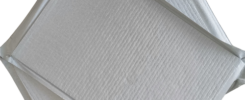
Alumina fiber paper is manufactured using polycrystalline alumina fibers as the primary raw material, combined with a binder.
It exhibits excellent flame retardancy, thermal insulation, electrical insulation, resistance to extreme temperatures, and aging resistance.
The product is halogen-free, non-toxic, and odorless; furthermore, it possesses a high dielectric constant and serves a protective function by providing both thermal insulation and fire resistance.
The material is easy to cut and process, features an extremely low dusting rate, and can be used directly or following encapsulation applied in electrical equipment,
electronic products, battery cells, and other applications requiring thermal insulation, fire protection, electrical insulation, and flame retardancy.

Alumina fiber paper Product Performance
- Excellent resistance to high and low temperatures, with a temperature range of -200°C to 1300°C;
- Excellent thermal insulation and aging resistance properties;
- Excellent electrical insulation properties;
- Excellent resistance to acids and alkalis, retaining over 90% of its original strength after exposure to strong acids and bases;
- Low smoke emission, non-toxic, and highly flame-retardant; compliant with the EU RoHS Directive.
Alumina fiber paper Technical Parameters

Typical Technical Parameters

Manufacturing Processes and Technological Advancements
Significant breakthroughs have been achieved in the preparation technology for alumina fiber paper in recent years, primarily reflected in advancements in thickness control and manufacturing process innovation:
Process Innovation:Under traditional wet-laid papermaking processes, the minimum achievable thickness for alumina fiber paper was limited to 2 mm. The nation’s first production line—utilizing an ultra-thin, low-thermal-conductivity, and erosion-resistant preparation process—innovatively incorporates spunlace technology and non-woven fabric processing techniques.
Thickness Breakthrough: The new technology has enabled the mass production of thin-profile alumina fiber paper products within the 0.3–1 mm thickness range. This achievement fills a critical gap in the market for ultra-thin products and facilitates their application in precision equipment.
Standardization Progress:The national standardization project titled “Test Methods for Dielectric Properties of Continuous Alumina Fibers” was officially issued on June 3, 2025. Administered by the National Technical Committee on Standardization for Glass Fiber, this initiative aims to standardize the testing of relevant performance characteristics.

Alumina fiber paper Typical Applications
- Thermal insulation and fire-protection for batterycell module and pack
- Flame retardant insulation of electronic products
- Composite material with aerogel material
- Sealing of high temperature resistant apparatus
- Heat preservation and insulation of furnace lining
- Composite material with resin-based, which is usedin thermal insulation and fire-protection area