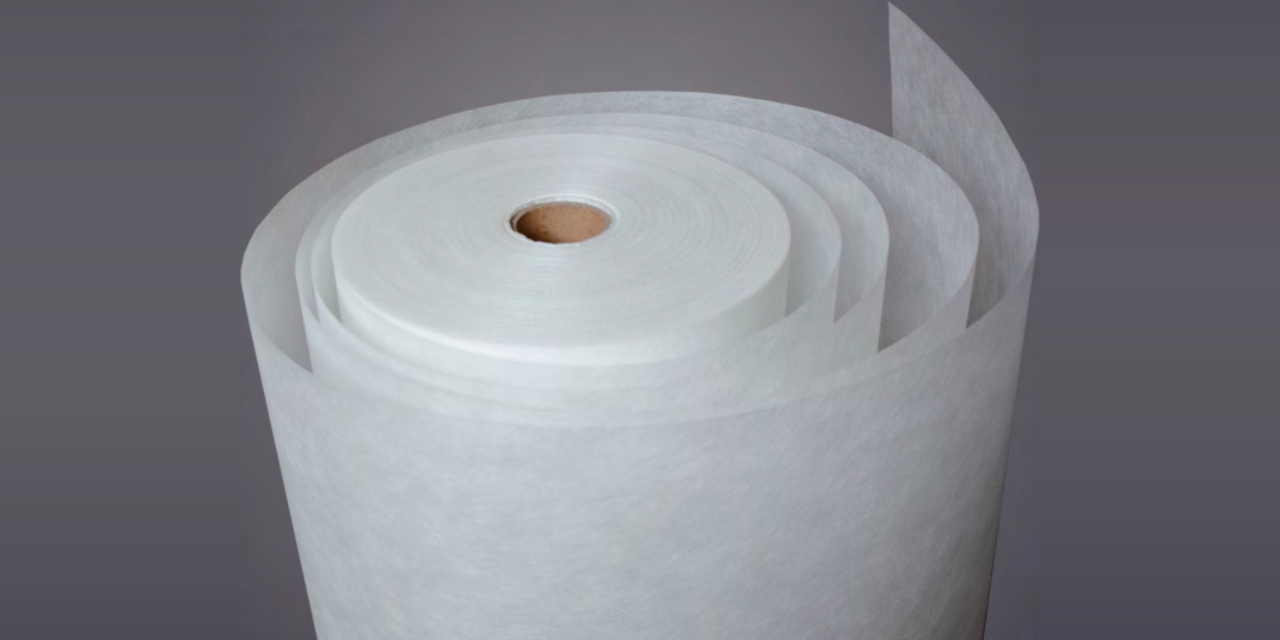
A fiberglass roofing tissue runs through the asphalt bath, and machine-direction streaks appear on the coated surface. Pinholes can be even more costly: small through-holes may lead to downgrading or rejection of the finished membrane. These are production problems worth tracing before the next roll goes onto the line.
Our starting point is the roll of tissue that came in the door. Before changing line settings, check its formation uniformity, moisture, binder-related specifications and directional strength. Clear purchasing specifications and incoming inspection can prevent avoidable tissue-related problems. Compare those findings with the actual coating, tension and cooling conditions to identify the cause. This article explains four defects, the tissue checks we would prioritize, and what to confirm before ordering.
First Tell the Four Defects Apart
Streaks, pinholes, cracking and curling need different checks. Use the table to identify the symptom and choose a starting point. The listed checks are an investigation guide; appearance alone does not establish the root cause.
| Defect | Appearance | Typical stage | Starting checks |
|---|---|---|---|
| Lengthwise streaks | Machine-direction bands in coating appearance | During coating or after cooling | Tissue formation and local basis weight; coating uniformity |
| Pinholes | Small holes or voids; some are visible against light | During coating or after cooling | Moisture and binder-related records; wet-out, trapped air and coverage |
| Cracking or web breaks | A transverse break, local tear or coating crack | At the bath, handling stage or after cooling | Failure stage, process-relevant strength and tension peaks |
| Curling or doming | Lifted edges or an out-of-plane sheet | After cooling or rewinding | Dimensional stability, coating balance and residual tension |
Keep a sample from the affected area and a reference sample from an acceptable run. Record the tissue lot, defect position and line conditions. A comparison under the same process settings is more useful than changing several variables at once.
Lengthwise Streaks Start with a Formation Check
A wet-laid fiberglass tissue forms when chopped glass fibers disperse in a water slurry and drain across a forming wire. Persistent bands of uneven fiber distribution can create local differences in basis weight and pore structure. Those differences can affect asphalt impregnation and the appearance of the coated sheet.
- More open zones can behave differently during impregnation from compact zones.
- Differences in wet-out or coating coverage may become more visible after cooling; surface color alone does not prove which mechanism is responsible.
A poorly formed band also deserves a strength check. Inspect the same position in the dry tissue and coated membrane, and check for localized weakness or tearing. If a streak does not track the tissue formation, examine coating uniformity, metering equipment and contamination before attributing it to the incoming roll.
We regard formation uniformity as an incoming quality requirement. It belongs in the purchasing discussion and receiving inspection, rather than becoming a question only after a coated batch is rejected.
How to screen it at incoming inspection: view a tissue sample against a consistent, diffuse backlight. Compare locations across the width and along the roll. A flashlight can help with an initial check, but a small spot check is not a substitute for the agreed inspection method.
- Look for persistent bands, holes, bundles or other obvious local differences.
- Compare the result with an approved reference sample and the agreed formation acceptance criteria.
This is a quick way to identify material that needs closer inspection. Where a difference is significant, follow up with local basis-weight checks and a controlled coating trial.
Pinholes Start with Moisture and Binder Checks
We would check moisture and the binder-related specification early in a pinhole investigation. They are practical incoming controls. Also review impregnation, trapped air, coating coverage and contamination; a pinhole is not proof of a tissue defect by itself.
Moisture and Storage
Residual moisture can generate vapor when tissue enters hot asphalt and contribute to bubbles or voids. Where the selected grade specifies moisture at ≤1.0%, compare the incoming result with that grade's agreed limit and test method. Do not treat 1.0% as a universal threshold below which pinholes cannot occur.
Follow the product's stated storage conditions and keep the packaging intact until use. After humid storage or possible moisture exposure in transit, recheck on arrival. Appearance and hand feel are not reliable acceptance tests.
Binder Content and Impregnation
LOI means loss on ignition in this article. It measures mass lost under specified ignition conditions and can be used as a binder-related control for the agreed glass-mat formulation. If a grade lists LOI at ≤25%, that is an upper limit, not a complete operating window. Agree the target or acceptable range and test method for the selected grade.
- A binder level below the formulation target can reduce fiber bonding and handling strength.
- A binder level or distribution that restricts the pore structure can affect wet-out and impregnation. Check actual absorption behavior rather than diagnosing pinholes from LOI alone.
Higher LOI is not automatically better. Our purchasing recommendation is to match binder chemistry, binder distribution and LOI requirements to the intended impregnation process. Tissue of the same basis weight can behave differently when these factors change.
Cracking and Web Breaks Need a Strength Specification
From the unwind stand through the asphalt bath, tissue must carry the line tension without losing web integrity. Temperature and contact time can change binder-controlled behavior, so the strength needed at the bath must be considered separately from a reported tensile value with unspecified test conditions.
A lower-weight grade can be unsuitable if its verified strength margin is too small for the process. However, weight alone does not determine failure: binder system, reinforcement construction, defects and tension peaks also matter. Identify whether the problem is a tissue web break or cracking of the cooled coating before selecting a remedy.
Compare basis weight and directional tensile requirements together. These three grades show the stated specification differences within the series:
| Product Code | Weight (g/m²) | MD Tensile (N/50 mm) | CD Tensile (N/50 mm) |
|---|---|---|---|
| SA-WM40 | 40 | ≥160 | ≥60 |
| SA-WM60 | 60 | ≥180 | ≥100 |
| SA-WM90 | 90 | ≥280 | ≥200 |
Within this series, the higher-weight grades have higher stated MD and CD tensile requirements. Confirm the current TDS, test method, conditioning and acceptance tolerances before ordering. The table alone does not establish strength retention in the hot asphalt bath or justify substituting one grade for another.
For faster or higher-tension runs, specify the strength margin required under the actual process conditions. Review peak tension, roller condition and handling, then qualify the proposed grade in a trial. A heavier grade may be appropriate, but it should be selected against those requirements rather than by weight alone.
Curling Needs Material and Process Checks
Review MD/CD strength alongside dimensional stability when investigating curling or doming. A tensile-strength ratio is not a direct measurement of directional shrinkage and does not establish the cause of curl. Check how the reinforced membrane responds to the actual coating, cooling and rewinding conditions, including coating balance and residual tension.
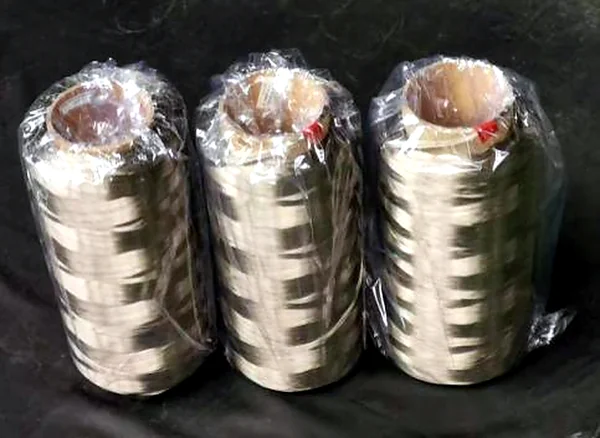
MD yarn reinforcement can increase longitudinal load capacity in a lightweight construction. It should be selected together with adequate CD performance and dimensional stability. We would not add or remove yarn, or move to a heavier grade, solely on the basis of curl appearance; compare the candidate constructions under the same process conditions.
A Practical Troubleshooting Checklist
Build the following checks into receiving inspection and line records. Our priority is to identify preventable tissue-related risks before the coating run, then use controlled comparisons to separate material effects from process effects.
Before the run:
- Confirm the tissue grade, lot identification, current TDS and agreed COA items.
- Check moisture against the selected grade's limit; recheck after suspected moisture exposure.
- Backlight-inspect formation against the approved reference sample.
- Confirm LOI requirements, MD/CD tensile requirements and the relevant test conditions.
During the run:
- Use the validated bath temperature, viscosity and contact-time window for the actual compound and tissue.
- Record speed and tension; watch for surges and handling damage.
- Check coating coverage, cooling conditions and rewinding tension.
When a defect appears:
Streaks → compare formation and local basis weight, then check coating uniformity.
Pinholes → check moisture and binder-related records alongside wet-out, trapped air and contamination.
Cracking or web breaks → identify the failure stage, verify process-relevant strength, and check tension peaks.
Curling → review dimensional stability, coating balance, cooling and rewinding tension together.
Compare affected and reference tissue lots at the same process settings before changing the purchase specification.
Our position is that a sound tissue specification and incoming inspection are the first defense against avoidable material-related defects. Agree moisture, LOI, directional tensile requirements and test methods before supply, and validate the selected grade under your coating conditions. Ask Saxobran for the current product data and agreed quality records. If streaks or pinholes are costing you batches, send us a tissue sample together with the grade, defect photos and operating conditions so we can discuss a comparison trial.
View fiberglass roofing tissue products and specifications
Technical References
ISO 1887 — Determination of combustible-matter content
WO 2007024683 A1 — Wet formed mat having improved hot wet tensile strengths
For material selection, see our guide to choosing a fiberglass mat for waterproofing applications.